Why 99% of "Cheap" Tailors Will Ruin Your Event (And How They Get Away With It)

"You find a tailor who quotes you a fraction of what the premium shops are charging. You think you have found a bargain. In reality, you have just stepped into a trap. This is the untold story of why the vast majority of affordable tailors either delay your work indefinitely or fail to deliver it at all."

You have an important event coming up. Perhaps it is a high-stakes boardroom presentation in Upper Hill, a milestone church function in Karen, or your own wedding. You need a garment that fits perfectly, looks expensive, and makes you feel like a million dollars. You need a custom made-to-measure suit or a bespoke dress that turns heads.

You start asking around. You look at the premium boutiques and realize their prices are steep. Then, a friend recommends a tailor in a small stall or a low-budget backroom shop. You go to see them, and they quote you a price that seems too good to be true. It is a fraction of what the premium shops are charging. You think you have found a hidden gem—a master tailor who hasn't raised their prices. You hand over your hard-earned money, feeling proud of your negotiation skills.

At FitFix Clothes Alterations, we have spent fourteen years operating in the heart of Nairobi. We have seen the aftermath of these "bargain" transactions play out hundreds of times. We have witnessed the sheer panic of a groom whose suit is still a pile of uncut fabric twenty-four hours before his wedding. We have seen women in tears on their doorstep because their dresses were botched beyond repair by a tailor who promised the world for KSh 2,000.

The truth is, there is a mathematical impossibility at the heart of cheap tailoring. And once you understand the mathematics, you will never look at a bargain tailor the same way again.

Premium Men's 3-Piece Suit by FitFix Nairobi

Click the image to explore our premium made-to-measure men's suits.

The Mathematical Impossibility of the "Cheap" Tailor

Let's break down the numbers. A high-quality, custom-tailored suit requires premium wool fabric. That fabric alone costs anywhere from KSh 15,000 to KSh 50,000, depending on the mill and the blend. Then there is the thread, the canvas, the buttons, the lining, the zipper, the tailor's time, the overheads of the shop, and the wages of the workers.

If a tailor quotes you KSh 3,000 for a "custom suit," do the math. They are either not buying the fabric at all, or they are using a substandard, plastic material that will fray and shine after a week. But there is a third, much darker possibility—one that we call the Ponzi Scheme of Tailoring.

Before we get into the mechanics of that scheme, let us be absolutely clear about what a legitimate custom garment actually costs to produce. This is not about justifying high prices for the sake of it. It is about understanding the raw economics of an honest tailoring business in Nairobi in 2026.

The True Cost Breakdown of an Honest Custom Suit

When a legitimate tailor quotes you a fair price for a made-to-measure suit, that price is not arbitrary. It is built on a foundation of real, unavoidable costs. Here is what is actually inside the price tag:

Add it all up, and you arrive at a realistic floor of KSh 40,000 to KSh 50,000 for a genuinely good custom suit—and significantly more for premium fabrics and complex detailing. This is not greed. This is arithmetic.

So when a tailor quotes you KSh 3,000, they are not offering you a discount. They are offering you a completely different product—one built on missing materials, missing labour, or missing ethics. And more often than not, all three are missing at once.

The Ponzi Scheme: How Your Deposit Is Stolen

Most tailors accept money to do the work. They accept a little money that cannot buy the necessary fabrics used to build the made-to-measure garment, tailor the cloth, and pay themselves. That is where the game starts.

Here is exactly how the cycle works:

The cycle goes on and on, an endless loop of robbing Peter to pay Paul. The tailor is not running a tailoring business; they are running a high-stakes cash flow gamble. They are perpetually behind, perpetually stressed, and perpetually lying to their clients. And you, the client, are the one who suffers.

Why This Scheme Feels Normal to the Tailor

What makes this scheme so insidious is that the tailor rarely sets out to defraud anyone. In their own mind, they are not a criminal—they are a survivor. They genuinely believe that if they can just get one more client, one more deposit, one more week, everything will balance out. They convince themselves that the work will get done, that the clients will understand, that the money will come.

But the mathematics of the scheme are unforgiving. Every new deposit creates a new obligation. Every new obligation requires more time than the tailor has. The hole gets deeper with every client they take on. Eventually, the only way to keep the illusion alive is to take on more work than any human being could possibly complete—which is exactly where the Domino Effect begins (we will cover that in Section 2).

"The cheap tailor is not running a business. They are running a live experiment in how long a lie can survive before it collapses."

From the outside, the shop looks normal. There are fabrics on the shelves, a sewing machine in the corner, photos of beautiful suits on the wall. But behind that facade is a frantic, daily scramble to keep the plates spinning. The tailor wakes up every morning already behind. They spend their day answering panicked calls, making excuses, and promising delivery dates they know they cannot meet. It is a miserable way to work—and it produces miserable results for the client.

The Horror Story: The Tale of Two Dresses

To illustrate the severity of this problem, let me share a real scenario that was witnessed in Nairobi. It perfectly encapsulates the deception, the lack of ethics, and the sheer audacity of the cheap tailor.

A lady paid a tailor a deposit to make a custom dress for a major church function. She chose the fabric, gave her measurements, and was promised that the dress would be ready in one week. Two weeks went by, and the dress had not been made. Every time she called, the tailor said, "I'm almost done, come tomorrow."

The morning of the church function arrived, and she had no dress. In a panic, she had to wear a different, older dress to the event.

Later that same day, the tailor finally finished her dress. But instead of calling her to pick it up, the tailor hired the dress out to another lady—a stranger—who wanted something nice to wear for a different event that evening. The tailor pocketed the rental fee.

The two ladies, completely unaware of each other, ended up attending the exact same church function. The original client was sitting in the pews when she saw a woman walking in wearing a dress that looked exactly like the one the tailor was supposed to sew for her. She stared at it. She recognized the fabric. She recognized the cut.

She approached the woman and asked, "Where did you get that dress?" The woman smiled and replied, "Oh, I hired it from a tailor for today."

Premium Made-to-Measure Ladies' Skirt Suit by FitFix Nairobi

Click the image to view our bespoke ladies' suits and custom garments.

The original client was furious. Her dress—the one she had paid for weeks ago—was being paraded around a church function by someone else while she stood there in an old outfit. The tailor had lied to her, delayed her work, and then profited off her fabric by renting it out to someone else. This is the level of unprofessionalism that exists in the shadows of the tailoring industry.

It is not just about losing money. It is about the stress, the humiliation, and the complete disregard for the client's important moments.

The Three Types of Cheap Tailors (And Why They All Fail You)

Not every cheap tailor operates the same way. Over fourteen years, we have identified three distinct archetypes of the "bargain" tailor—and each one fails the client in their own unique way. Understanding which type you are dealing with can help you spot the warning signs before you hand over your deposit.

Type 1: The Desperate Hustler

This is the most common type. They are often talented with a needle, but they are terrible with money. They take on every job that walks through the door, regardless of whether they have the capacity to complete it. They live from deposit to deposit, always one client away from financial disaster.

When you engage a Desperate Hustler, the first few days go well. They are responsive, enthusiastic, and full of promises. But as the deadline approaches and the money runs out, they become evasive. Calls go unanswered. Deadlines slip. And the garment that was supposed to be a masterpiece arrives late, rushed, and riddled with compromises.

The warning signs: They push hard for an upfront deposit. They have no written receipts or contracts. They speak vaguely about "sourcing fabric" without showing you any samples. They are always "just about to finish" whatever they are working on.

Type 2: The Backroom Assembler

This tailor is not really a tailor—they are an assembler. They do not cut, draft, or fit properly. They take your measurements, send them to a cheap factory (often in another country), and have the garment mass-produced on a block pattern. The "custom" part is purely marketing.

When you receive the garment, it will look vaguely like what you asked for, but nothing will fit correctly. The shoulders will be too wide or too narrow. The sleeves will be the wrong length. The jacket will feel like it belongs to someone else—because it does. It belongs to the imaginary "average" person the block pattern was designed for.

The warning signs: They do not have a proper cutting table or industrial machines. They cannot show you a work-in-progress garment. They quote suspiciously fast turnaround times for "custom" work. They blame the "factory" when things go wrong.

Type 3: The Vanishing Artist

This is the most dangerous type. They are charming, talented, and convincing. They may even produce genuinely beautiful garments for the first few clients. But their business is built on a house of cards, and when the cards collapse—as they always do—they disappear.

The Vanishing Artist takes deposits from multiple clients, uses the money to fund a lifestyle or a side venture, and then, when the deadlines pile up and the money runs out, they vanish. They change their phone number. They close their shop. They reappear months later in a different part of town under a different name, and the cycle begins again.

The warning signs: They have no verifiable physical address. They operate primarily through social media or WhatsApp. They ask for unusually large deposits. They have no reviews or testimonials from past clients. They are vague about their background and experience.

All three types share one thing in common: they cannot deliver what they promise. And the client—you—is the one who pays the price.

The Psychology of the Bargain: Why Smart People Fall for Cheap Tailors

If cheap tailors are so obviously a bad deal, why do so many intelligent, successful people fall for them? The answer lies in a combination of cognitive biases and emotional needs that the cheap tailor exploits—often without even realizing they are doing it.

1. The Anchoring Effect

When you first start shopping for a custom suit or dress, you look at the premium tailors and see prices like KSh 55,000 or KSh 99,000. These become your mental "anchor"—the reference point against which you judge everything else. When a cheap tailor then quotes you KSh 3,000, your brain immediately compares it to the anchor and screams, "What a deal!"

What your brain fails to do is ask the more important question: "Why is it so cheap?" The anchoring effect makes us focus on the relative saving rather than the absolute value. A KSh 3,000 suit is not a bargain if it falls apart after one wear—it is a KSh 3,000 mistake.

2. The Optimism Bias

We all believe, deep down, that we are the exception. Other people get scammed, but not us. Other people's tailors disappear, but ours will deliver. This optimism bias is powerful—and it is exactly what the cheap tailor relies on.

When you hand over your deposit, you are not just buying a garment. You are buying a story: the story of the hidden gem, the underappreciated master, the bargain that no one else knows about. It is a flattering story, and we want to believe it. The cheap tailor is counting on that.

3. The Sunk Cost Fallacy

Once you have paid a deposit, you are emotionally invested. Even if the tailor starts missing deadlines and making excuses, you are far more likely to "wait it out" than to cut your losses and walk away. The longer you wait, the harder it becomes to abandon the project—because walking away means admitting you were wrong.

The cheap tailor knows this. They know that once they have your deposit, you are far more likely to tolerate delays, excuses, and even outright lies than to start over with someone else. You have become a captive client.

4. The Illusion of Control

Many clients believe that by "keeping a close eye" on the tailor—calling regularly, visiting the shop, sending reminders—they can prevent a bad outcome. But the truth is, you cannot supervise your way out of a broken business model. If the tailor has already spent your deposit on rent, no amount of phone calls will conjure the fabric back into existence.

These psychological traps are powerful. They are why so many otherwise savvy professionals end up in tears on the morning of their wedding. The cheap tailor does not need to be a master manipulator—they just need to understand human nature, and exploit it.

The Real-World Consequences: What a Failed Garment Actually Costs You

We have talked about money and stress, but let us get specific about what a failed tailoring job actually costs you in practical terms. Because the true cost of a cheap tailor is almost never just the deposit you lost.

Scenario 1: The Wedding Suit Disaster

You are a groom. You paid KSh 5,000 to a cheap tailor for a "custom suit." Two days before the wedding, the suit arrives, and it is a disaster. The jacket is too small, the trousers are baggy, and the fabric looks cheap under the lights. You have no time to order a proper suit. You spend the day before your wedding running from shop to shop, trying to find something off the rack that fits. You end up paying KSh 25,000 for a suit you did not choose, in a style you do not love, and you wear it only once.

Total cost of the "bargain": KSh 5,000 (wasted deposit) + KSh 25,000 (emergency suit) + the emotional toll of a ruined wedding day. The cheap tailor cost you KSh 30,000 and a memory you cannot get back.

Scenario 2: The Boardroom Presentation

You are an executive. You paid KSh 8,000 to a cheap tailor for a "custom" suit ahead of a major client presentation. The suit arrives late, the shoulders are uneven, and the fabric shines under the office lights. You wear it anyway because you have no other option. During the presentation, you feel self-conscious. You keep tugging at the jacket and adjusting the collar. You do not speak with your usual authority. The client notices your discomfort—and they notice the cheap fabric.

Total cost of the "bargain": KSh 8,000 (wasted deposit) + the potential loss of a major contract + the long-term hit to your professional image. The cheap tailor cost you far more than KSh 8,000—they cost you credibility.

Scenario 3: The Church Function Humiliation

You are a woman who commissioned a custom dress for a major church function. The dress arrives late, and the tailor has rented it out to someone else. You have to wear an older outfit, and you spend the entire event feeling embarrassed and underdressed. You see other women in beautiful garments and feel a pang of regret.

Total cost of the "bargain": The wasted deposit, the cost of the fabric, and the emotional weight of a day you will always remember for the wrong reasons.

These scenarios play out in Nairobi every single week. They are not rare exceptions—they are the norm for clients who choose the 99%.

Why Cheap Tailors Keep Getting Away With It

You might be wondering: if cheap tailors are this unreliable, why do they keep getting customers? Why do they keep getting away with it? The answer is a combination of industry structure, consumer behavior, and the sheer difficulty of holding them accountable.

An Unregulated Industry

In Kenya, tailoring is a largely unregulated industry. There is no licensing board, no mandatory certification, and no consumer protection watchdog specifically for tailoring. Anyone with a sewing machine and a shop sign can call themselves a tailor. There is no minimum standard for training, no requirement for a physical address, and no penalty for taking deposits and failing to deliver.

This means that the burden of due diligence falls entirely on you, the consumer. It also means that when things go wrong, your options are limited. You can report the tailor to the police, but for small deposits, the case is unlikely to go anywhere. You can sue, but the legal fees will quickly exceed the value of the garment. Most clients simply cut their losses and move on—which is exactly what the cheap tailor is counting on.

The Word-of-Mouth Problem

Cheap tailors often rely on word-of-mouth recommendations from well-meaning friends and family. Someone's cousin had a good experience, so they recommend the tailor to everyone they know. What they do not know is that the "good experience" was probably a fluke—or that the tailor is now three months behind and about to disappear.

Word-of-mouth is powerful, but it is also unreliable. It does not scale, and it does not account for the fact that a tailor's quality can vary wildly from one client to the next. A tailor who did a great job on your friend's dress last year may be a completely different operation today.

The Review Economy

In the age of Google and social media, you might think that bad tailors would be exposed quickly. But the reality is more complicated. Most cheap tailors operate without a digital footprint. They do not have a Google My Business profile, they do not have a website, and they do not have reviews. They operate entirely in the informal economy, where reputation is built on personal connections and word-of-mouth—not online transparency.

This makes it incredibly difficult for consumers to research a tailor before handing over their money. You cannot read reviews, you cannot see past work, and you cannot verify that the tailor even exists as a legitimate business. You are essentially gambling with your money and your event.

Why People Don't Speak Up

Even when clients are burned, they often do not speak up. There are several reasons for this. First, they may feel embarrassed—they do not want to admit that they were scammed. Second, they may not want to cause conflict—they know the tailor personally, or they were referred by a friend, and they do not want to damage the relationship. Third, they may simply not know where to report the problem. There is no central database of bad tailors, no consumer protection hotline, and no way to warn other potential clients.

The result is a cycle of silence. Each burned client keeps quiet, and the next client walks into the same trap. The cheap tailor continues to operate, and the cycle repeats.

The FitFix Difference: Why We Charge What We Charge

We are telling you this because we want you to understand why our prices at FitFix are different. We do not run a Ponzi scheme. We do not use your deposit to pay for someone else's fabric.

When you pay us for a premium bespoke suit, we immediately allocate those funds to order the high-quality Italian wool, the premium Bemberg lining, and the horn buttons for your specific garment. Your money buys your fabric. Period.

We charge what we charge because quality materials cost money, highly skilled labor costs money, and running a legitimate, registered business with a physical workshop costs money. We do not cut corners, and we do not gamble with your deposits. When you book with FitFix, you are paying for the guarantee that your garment will be ready on time, it will fit perfectly, and it will be made of the finest materials.

But the FitFix difference is not just about money. It is about transparency. When you walk into our workshop, you can see where your garment is being made. You can see the fabrics. You can meet the tailors. You can see the progress of your order at every stage. We do not hide behind vague promises or "it's almost ready" texts. We show you exactly what is happening, and we deliver exactly what we promise.

This level of transparency is rare in the tailoring industry—and it is exactly what you deserve. You should not have to gamble with your money, your time, or your important events. You should be able to trust that the person making your garment will deliver it on time, on budget, and exactly as promised.

Tired of the anxiety of cheap tailoring? Experience the peace of mind that comes with professional craftsmanship. WhatsApp us today to discuss your custom suit or dress: 0705 728 896.

What This Series Will Cover

Over the next nine sections, we are going to take you on a deep dive into the dark side of the tailoring industry. We will cover:

By the end of this series, you will never look at a bargain tailor the same way again. You will understand exactly why the 99% fail—and you will know exactly how to protect yourself from becoming their next victim.

Don't Be a Victim of the 99%

Ensure your next garment is crafted with precision, delivered on time, and built to last. Book a consultation with FitFix today.

Book Your Consultation Now

Free pickup and delivery across Nairobi.

Section 2: The Domino Effect — How One Late Tailor Collapses the Entire Schedule

"In Section 1, we exposed the financial Ponzi scheme of the cheap tailor—how your deposit is used to pay for someone else's fabric. But there is a second, equally destructive scheme at play: the Ponzi scheme of time. The cheap tailor takes on ten projects knowing they only have the physical capacity for two. They are not just gambling with your money; they are gambling with your wedding day, your graduation, and your business presentation."

Imagine a game of dominos. You line them up, perfectly spaced, a beautiful and orderly sequence. You tap the first one, and it falls, knocking into the next, which knocks into the next, until the entire carefully constructed line collapses in a chaotic heap. This is exactly what happens inside the workshop of a cheap tailor every single weekend.

At FitFix Clothes Alterations, we have watched this cycle repeat itself for fourteen years. We have seen the sheer panic in the eyes of a bride on a Saturday morning when she realizes her dress is not ready. We have seen the anger of a groom who was promised a bespoke suit and is handed a poorly stitched disaster an hour before his ceremony. We have seen the quiet devastation of a mother of the bride who paid for a custom gown weeks in advance, only to be told the day before the wedding that the tailor "is still working on it."

The common denominator in all these tragedies? A tailor who lied about their capacity. A tailor who said "yes" when they should have said "no." A tailor who treated your important day as just another line item in an overflowing ledger.

In Section 1, we showed you how the money disappears. In this section, we are going to show you how the time disappears—and why the Domino Effect is the single most predictable catastrophe in the tailoring industry.

The Myth of the "Backroom Factory"

When you walk into a cheap tailor's shop and see racks of fabric and photos of beautiful garments on the wall, you assume there is a team of people working in the back. You assume there is an assembly line—one person cutting, one person sewing, one person pressing. This is the illusion they want you to believe.

The reality is vastly different. In 99% of these shops, the "factory" is one overworked individual sitting behind a single sewing machine, surrounded by piles of uncompleted work. They do not have a team. They do not have industrial blind-stitchers or specialized pressing tables. They have a basic machine, a pair of scissors, and a desperate need for cash flow.

We have visited these workshops. We have seen the reality behind the glossy Instagram photos. The fabric is piled on the floor. The ironing board is held together with tape. The single fluorescent bulb flickers overhead. And in the middle of it all sits the tailor, hunched over a machine that should have been serviced five years ago, frantically trying to catch up on a backlog that grows larger every day.

This is not a factory. It is a pressure cooker. And you—the client—are about to be added to the pile.

The Capacity Illusion

Here is the fundamental problem: a cheap tailor has almost no capacity to scale. They cannot hire more staff because they cannot afford to pay them. They cannot buy more machines because they have no capital. They cannot turn away clients because they need every deposit to survive.

So they do the only thing they know how to do: they say "yes" to everyone. They take on more work than they can possibly complete, and they hope—against all evidence—that somehow, someway, they will manage to finish it all. This is not optimism. It is delusion.

The result is a workshop that is permanently overwhelmed. Every surface is covered in half-finished garments. Every deadline is missed. Every client is frustrated. And the tailor is trapped in an endless cycle of overcommitment, exhaustion, and lies.

Why They Cannot Say "No"

You might wonder: why don't they just turn down work they cannot handle? The answer is simple: they cannot afford to. For a cheap tailor, every deposit is survival. Turning away a client means turning away the money that pays for rent, food, or their child's school fees. They would rather overpromise and underdeliver than admit that they are not capable of taking on more work.

This is a classic trap of the informal economy. The tailor is so focused on surviving today that they cannot see the long-term consequences of their actions. They do not realize that every missed deadline, every botched garment, and every angry client is destroying their reputation and making it even harder to attract future work.

But by the time they realize this, it is usually too late. The damage is done. The clients are gone. And the tailor is left alone in their workshop, surrounded by the wreckage of broken promises.

The Mathematics of Tailoring

It takes a skilled tailor with professional equipment roughly 30 to 40 hours of continuous, focused labor to construct a bespoke suit from scratch. This includes taking measurements, drafting the pattern, cutting the fabric, basting, conducting multiple fittings, setting the canvas, hand-stitching the sleeve heads, and pressing.

If five clients need suits by Saturday, the tailor has just committed to 150 to 200 hours of work in a 96-hour window. It is mathematically impossible. Even if they never slept, they could not finish the work. But instead of being honest with the clients, the tailor begins the frantic scramble that we call the Domino Effect.

Let us break this down even further, because the numbers are more brutal than most clients realize:

Now, imagine a tailor who has taken on five suits, three dresses, and a dozen small alterations in a single week. That is 150–200 hours of suit work, 45–75 hours of dress work, and 12–36 hours of alteration work. Total: 207–311 hours of labor.

Even if the tailor worked 24 hours a day, seven days a week, they would only have 168 hours available. The math is not just tight—it is physically impossible. The tailor has committed to more work than a team of five people could complete in a week.

This is the reality of the cheap tailor's workshop. They are not just behind—they are perpetually, mathematically, hopelessly behind. And no amount of late nights, skipped meals, or frantic sewing can close the gap.

The Hidden Cost of Rushing

When a tailor is forced to work at double or triple their normal speed, quality is the first casualty. Here is what happens when a suit is rushed:

By the time you receive the garment, it is not just late—it is also compromised. You have paid for a bespoke suit, but you have received a hastily assembled costume.

The Anatomy of a Tailoring Delay: Day by Day

Let's break down exactly how the Domino Effect unfolds over the course of a single week. When a cheap tailor takes on too much work, here is the grim reality of what happens behind the scenes:

Monday: The Illusion of Progress

On Monday, the tailor is still riding the high of collecting five deposits. They buy the fabric for Client A, the one who is screaming the loudest or who has the earliest deadline. They cut the fabric. They sew a few seams. They feel productive. They tell themselves they will catch up on Tuesday.

What they do not realize—or refuse to admit—is that they have already lost the game. Client A's suit alone will take 30–40 hours. They have spent perhaps four hours on it today. That leaves 26–36 hours of work remaining for a suit that needs to be ready in five days. And they have four other clients waiting.

Monday is the day of denial. The tailor convinces themselves that everything is under control. They ignore the growing pile of fabric on the floor. They ignore the unanswered WhatsApp messages from Client B and Client C. They focus on the one garment in front of them, and they tell themselves that tomorrow will be better.

Tomorrow will not be better.

Tuesday: The Bottleneck

On Tuesday, Client A's suit requires the internal canvas to be hand-stitched and the sleeve heads to be set. This is the most time-consuming part of tailoring. It requires absolute focus. It requires patience. It requires a quiet, undisturbed workspace.

But the tailor's workspace is anything but quiet. The phone is ringing. Client B is calling to ask if they can come in for their final fitting. Client C is sending messages on WhatsApp asking for a progress update. Client D has shown up at the shop in person, demanding to see their garment. Client E's mother has called to say her daughter's dress needs to be ready by Thursday, not Saturday, because the church function has been moved.

The tailor is distracted. They rush the canvas. They skip a step. They tell Client B to come in tomorrow. They tell Client D that the garment is "in the final stages." They tell Client E's mother that Thursday is no problem.

None of this is true. But the lie buys them a few more hours of peace.

Wednesday: The Panic Sets In

By Wednesday, the tailor realizes they are severely behind. Client A's suit is only 40% done. Client B's dress hasn't even been cut. Client C's trousers are still a roll of fabric. Client D's jacket is pinned together but not sewn. Client E's dress is a complete disaster—the fabric has been cut wrong, and there is not enough material to re-cut it.

The tailor makes a decision: they will prioritize the garments that are easiest to finish quickly, neglecting the complex ones. They start using shortcuts. They use glue instead of stitches. They use cheap thread that will snap under pressure. They skip the pressing and finishing steps. They tell themselves they will fix it later, but they know they won't.

Wednesday is also the day the tailor starts avoiding phone calls. They stop answering unknown numbers. They respond to WhatsApp messages with vague, non-committal replies: "It's almost ready." "Just finishing up." "Come tomorrow." These are not statements of fact. They are delaying tactics.

Thursday: The Lies Begin

On Thursday, the tailor stops answering their phone entirely. They tell their assistant (if they have one) to tell clients that they are "in a meeting" or "out buying fabric." The clients are now in a state of panic. The event is in two days. They have no garment. They start calling relentlessly. They start visiting the shop. They start threatening to report the tailor to the police.

The tailor sends a text message: "I'm just doing the final touches. It will be ready tomorrow at 10 AM." It is a lie. The garment hasn't even reached the sewing machine yet. The fabric is still sitting on the cutting table, waiting for someone to start.

Meanwhile, Client E's mother arrives at the shop, demanding her daughter's dress. The tailor tells her that there was a problem with the fabric. The fabric arrived damaged from the supplier. It's a lie. The fabric is fine. The tailor simply cut it wrong, and now there isn't enough to finish the dress. Client E's mother leaves in tears.

Friday: The All-Nighter

Friday is the day of reckoning. The tailor does not sleep. They sit at the machine from 6 PM on Thursday until 6 AM on Friday, sewing furiously. The stitching is uneven. The hems are crooked. The fabric is burned in places because the iron was too hot. They finish the garments at 7 AM on Friday morning. They are a mess. But they are finished.

Or rather, they are "finished." The tailor knows they are not good enough. They know the client will be disappointed. They know the garment will not fit properly. But they are out of time, and they have no other option. They hang the garments on hangers, cover them with plastic bags, and prepare for the inevitable confrontation.

Friday is also the day the tailor starts making excuses. They will blame the fabric supplier. They will blame their machine. They will blame the client's measurements. They will blame the weather, the traffic, the government, the economy. Anything except themselves.

Saturday: The Disaster

The client comes to pick up the garment. They are exhausted, stressed, and angry. They try on the suit or the dress, and it doesn't fit. The shoulders are too wide. The waist is too tight. The hem is crooked. There is no time to fix it. The event is in three hours. The client is forced to either wear a substandard garment or find a backup outfit at the last minute. The tailor has ruined the most important day of their life.

In some cases, the tailor does not even show up on Saturday. They have disappeared. Their phone is off. Their shop is locked. The client is left standing on the street, holding a deposit receipt that is now worthless, with no garment and no way to get their money back.

This is the Domino Effect in its final, brutal form. It does not end with a garment. It ends with a shattered client, a ruined event, and a tailor who has already moved on to the next victim.

The Domino Effect in Real Life: A Nairobi Case Study

Let me share a scenario that played out in Nairobi a few years ago. It is a story that we have heard echoed countless times since, and it illustrates exactly how the Domino Effect destroys not just one client, but an entire network of clients who are all connected by a single, overwhelmed tailor.

A groom—let's call him James—commissioned a custom suit from a cheap tailor in the Nairobi CBD. He paid a deposit of KSh 4,000 and was promised the suit would be ready in three weeks. The wedding was in four weeks. James felt confident. He had given himself a buffer week.

What James did not know was that the tailor had taken on five other wedding suits that same month. The tailor had also taken on three bridal gowns, two bridesmaids' dresses, and a dozen or so smaller alterations. The tailor was already behind when James walked in. His deposit was not used to buy fabric for James's suit—it was used to pay for the previous client's fabric, which was already three weeks overdue.

Three weeks passed. James called the tailor. "It's almost ready," the tailor said. "Come tomorrow."

Tomorrow came. James went to the shop. The tailor was not there. The shop was locked. James called again. The tailor answered, sounding stressed. "I'm at the fabric supplier," he said. "There was a problem with your wool. I'm sorting it out."

This was a lie. The wool had been in the shop for two weeks. The tailor simply had not started the suit.

Two days before the wedding, James finally received his suit. It was, in his words, "a disaster." The jacket was too short. The trousers were too tight. The fabric looked nothing like the sample he had been shown. The stitching was uneven. The buttons were mismatched. The tailor had clearly rushed the garment in a single night.

James had no choice. He wore the suit to his wedding. He spent the entire day tugging at the jacket and adjusting the trousers. His wedding photos show a man who looks uncomfortable, self-conscious, and unhappy. The most important day of his life was overshadowed by a garment that did not fit.

James is not an isolated case. He is one of hundreds of grooms, brides, executives, and churchgoers who have been victims of the Domino Effect. And the saddest part? The tailor is still in business. He is still taking deposits. He is still promising the world. And the cycle continues.

The Psychology of the Lie: Why They Keep You Waiting

Why do they lie? Why do they tell you "it's almost ready" when they haven't even started? The answer lies in the psychology of desperation. The cheap tailor knows they are in the wrong. They know they have taken your money and failed to deliver. But they are terrified of the confrontation.

If they tell you the truth—"I haven't started your dress, and I won't be able to finish it in time"—you will demand your money back. You will cause a scene. You might even call the police. They cannot afford to refund you. The money is gone. So they lie. They hope that by some miracle, they will find the time to finish the work. They string you along, hoping you won't cancel.

It is a cruel and manipulative tactic. They are prioritizing their own survival over your peace of mind. They are stealing your time and your joy.

The "Hope" Strategy

One of the most insidious aspects of the Domino Effect is the way the tailor uses "hope" as a tool. They know that if they give you a firm "no"—if they tell you they cannot deliver—you will walk away. So instead, they give you "hope." They tell you it will be ready tomorrow. They tell you they are working on it right now. They tell you they have just one more step to finish.

This "hope" keeps you engaged. It keeps you from walking away. It keeps you from demanding a refund. It keeps you from going to a different tailor. You stay, day after day, week after week, waiting for a garment that may never arrive.

The tailor knows that most clients will not walk away once they have invested time and money. They know that hope is more powerful than anger. And they exploit this ruthlessly.

The Blame Game

When the garment is finally delivered—or when the client finally gives up—the tailor does not take responsibility. Instead, they blame everyone else. They blame the fabric supplier. They blame their machine. They blame the weather. They blame the client's measurements. They blame the client's body. They blame the client's "unrealistic expectations."

This is a classic defensive mechanism. By blaming others, the tailor avoids admitting that they were at fault. They avoid the shame of failure. They avoid the confrontation that would come with an honest apology.

But the client is left holding the bag—literally and figuratively. They are left with a ruined garment, a lost deposit, and the knowledge that they were lied to by someone they trusted.

The Emotional Toll on the Client

The stress of chasing a bad tailor is immeasurable. You cannot focus on your work. You cannot sleep. You are constantly checking your phone, hoping for an update. You are filled with anxiety about whether your outfit will be ready.

When you finally realize the garment is not going to be ready, or it is a disaster, the emotional crash is severe. You feel betrayed, angry, and humiliated. You have to explain to your family, your friends, or your boss that the outfit you had planned is ruined.

This is not just about clothing. It is about the trust you placed in someone to deliver on their promise. And it is a trust that the cheap tailor has completely violated.

The Sleepless Nights

Ask anyone who has been through the Domino Effect, and they will tell you about the sleepless nights. The nights spent staring at the ceiling, wondering if the tailor will come through. The nights spent drafting angry messages that you never send because you don't want to "upset" the tailor. The nights spent calculating backup plans—where you can find a suit off the rack, who you can borrow a dress from, whether you can cancel the event altogether.

The Domino Effect does not just steal your money and your garment. It steals your sleep, your peace of mind, and your ability to enjoy the weeks leading up to your event.

The Humiliation of the "Plan B"

When the garment finally fails—or fails to arrive—the client is forced to scramble for a Plan B. They have to find a replacement outfit at the last minute. They have to explain to their family and friends why their custom garment is not ready. They have to walk into their event wearing something they did not plan, feeling self-conscious and underdressed.

This is a unique form of humiliation. It is not just about the garment. It is about the loss of control. You trusted someone to handle this important detail of your life, and they failed you. And now you are left to pick up the pieces, in public, on the day you were supposed to shine.

Why the Domino Effect Is Worse Than the Money Loss

When clients talk about bad tailoring experiences, they often focus on the money. "I lost KSh 5,000." "I paid for fabric that was ruined." And yes, the financial loss is real and painful. But the Domino Effect is worse than the money.

Money can be earned back. But a wedding day cannot be re-lived. A graduation cannot be repeated. A boardroom presentation cannot be rescheduled. The Domino Effect steals something far more valuable than money—it steals your time, your peace of mind, and your ability to fully experience the moments that matter most.

We have seen brides in tears on their wedding morning. We have seen grooms forced to wear suits that did not fit. We have seen executives walk into important meetings feeling self-conscious and unprepared. And in every case, the damage was done not just to their wardrobe, but to their confidence and their memories.

This is why we take the Domino Effect so seriously at FitFix. This is why we refuse to overcommit. This is why we are honest about our timelines, even when it means turning away work. We know that your event matters. We know that your time matters. And we know that a broken promise is far more costly than a missed sale.

Don't let the Domino Effect ruin your event. Experience the guarantee of a tailor who values your time. WhatsApp us today to secure your fitting: 0705 728 896.

The FitFix Difference: How We Eliminate the Domino Effect

At FitFix, we do not operate on a cash flow gamble. We operate on a schedule. We do not take on more work than we can physically handle. We know exactly how many hours a bespoke suit takes, and we allocate our resources accordingly. When you book a custom made-to-measure suit, we don't just take your money and hope for the best. We give you a realistic deadline, and we stick to it.

Here is how we ensure your garment is always ready on time:

We charge what we charge because we invest in quality materials, skilled labor, and a professional workshop. We do not use your deposit to pay for someone else's fabric. And we do not play the Domino Effect with your important moments.

Why We Turn Down Work

There is a counterintuitive truth in the tailoring business: the best tailors are the ones who turn down the most work. At FitFix, we regularly turn away clients because we know we cannot meet their timeline without compromising on quality. This is not a marketing gimmick. It is a fundamental principle of how we operate.

When we turn down a client, we are protecting them from the Domino Effect. We are protecting them from the stress, the panic, and the humiliation of a rushed, badly made garment. We are also protecting our own reputation—because we know that a single rushed garment can undo years of careful work.

The cheap tailor never turns down work. They take every deposit, every order, every project—even when they know they cannot deliver. They are so focused on the immediate cash flow that they cannot see the long-term consequences. At FitFix, we see the long-term. We know that a reputation for reliability is worth far more than a single deposit.

Premium Made-to-Measure Ladies' Skirt Suit by FitFix Nairobi

Click the image to explore our bespoke ladies' suits and custom garments.

The Workshop Reality: Why We Have a Waiting List

We often have a waiting list. Why? Because we refuse to compromise on the quality of our work. We could pack our workshop with hundreds of orders, hire unskilled workers to stitch them together, and use cheap fabrics. But we don't. We believe in the art of tailoring.

When you join our waiting list, you are guaranteed that your garment will be crafted with the same attention to detail as the garments we have made for hundreds of executives and grooms. We don't rush the process. We don't cut corners. And we don't let the Domino Effect destroy our reputation.

If you need a garment urgently, we do offer a rush service. But we are transparent about the timeline, and we charge accordingly. We never promise a deadline we cannot meet.

What "Rush Service" Actually Means

Many clients assume that "rush service" means the tailor will simply work faster. At FitFix, rush service means something different. It means we restructure our entire schedule to prioritize your garment. We move other projects to accommodate yours. We assign additional tailors to your order. We work evenings and weekends, if necessary.

But here is the key: we only offer rush service when we are absolutely certain we can deliver without compromising on quality. If our schedule is already full, we will tell you "no"—even if it means losing your business. This is what separates a professional workshop from a cheap tailor.

The cheap tailor will accept every rush order, no matter how full their schedule. They will promise you the impossible, and then they will fail. At FitFix, we promise only what we can deliver—and we deliver what we promise.

The Cost of a Missed Deadline

We understand the stakes of a missed deadline. We have seen the consequences firsthand. That is why we have built our entire business around reliability. When you book with FitFix, you are not just buying a garment. You are buying the guarantee that your garment will be ready when you need it.

This guarantee is not just good customer service. It is a fundamental part of our business model. We know that if we miss a deadline, we will lose a client forever. We know that the client will tell their friends and family about the experience. We know that our reputation will suffer.

The cheap tailor does not think this way. They are not building a long-term business. They are surviving from one day to the next. They do not care about their reputation because they do not believe they will be in business long enough to build one.

At FitFix, we have been in business for fourteen years. We plan to be in business for another fourteen. We care about our reputation because it is the foundation of everything we do. And that is why we will never let the Domino Effect destroy it.

The Signs You Are About to Become a Domino

How do you know if you are about to become the victim of the Domino Effect? Here are the warning signs to watch for:

If you notice any of these signs, walk away. Do not let the low price blind you to the reality of the risk. Your event is too important to gamble with.

Book Your Guaranteed Fitting Today

Stop gambling with your important moments. Stop dealing with the stress of the Domino Effect. Book a consultation with FitFix today, and let us show you how professional tailoring is done.

Book Your Consultation Now

Free pickup and delivery across Nairobi.

Section 3: The Ultimate Betrayal — When Your Tailor Rents Out Your Dress (The Church Horror Story)

"In Section 1, we exposed the financial Ponzi scheme—how your deposit pays for the previous client's fabric. In Section 2, we exposed the Domino Effect—how one late garment collapses the entire schedule. Now, we arrive at the darkest corner of the tailoring industry: the complete and utter betrayal of trust. This is the true story of how a tailor took a client's money, failed to deliver on time, and then committed an act of sheer audacity that defies belief."

When you commission a bespoke garment, you are entering into a covenant of trust. You are handing over your hard-earned money, your exact measurements, and your hopes for a specific event. Whether it is a luxury women's skirt suit for a boardroom presentation or a custom dress for a church function, you expect the tailor to treat your garment with the respect it deserves.

The cheap tailor, however, does not view your garment as a masterpiece. They view it as a commodity, a bargaining chip, and sometimes, a quick way to make an extra buck. Your fabric is not sacred to them. Your measurements are not a promise. Your event is not a priority. To the cheap tailor, you are simply another deposit in a long line of deposits—and your garment is just another asset to be squeezed for cash.

Let me tell you a story that happened right here in Nairobi. It is a story that perfectly encapsulates the absolute lack of ethics that plagues the lower tiers of the tailoring industry. It is a story that I share not just to shock you, but to warn you. Because if you are currently using a "bargain" tailor, this could very well happen to you.

This is the story of the tailor who rented out a client's dress. And it is far more common than you think.

The Promise and the Deposit

A lady walked into a tailoring shop in Nairobi. She had a major church function coming up—a milestone event that required her to look her absolute best. It was not just any Sunday service. It was a celebration that would be attended by her family, her friends, her church community, and people she had not seen in years. She had been planning her outfit for weeks. She had saved for the fabric. She had imagined herself walking into the church, greeting her loved ones, and feeling beautiful.

She had purchased a beautiful, expensive fabric. It was not the cheap polyester blend you find in the informal markets. It was a fabric she had chosen carefully—one that draped beautifully, one that photographed well, one that she knew would make her feel confident and elegant. She had spent a significant portion of her savings on it, because she believed that this event deserved the best.

She sat down with the tailor. She explained the design she wanted—a classic silhouette with a modern twist, something that would flatter her figure and suit the occasion. The tailor nodded enthusiastically. He complimented her fabric. He praised her taste. He told her she had chosen well.

He took her measurements. He sketched the design. He promised her the world.

He told her the dress would be a masterpiece. He told her it would fit her like a second skin. He told her that she would be the best-dressed woman at the function. He quoted her a price that felt like a steal. She paid a 50% deposit on the spot, and the tailor promised the dress would be ready in two weeks.

She left the shop feeling confident and excited. She had found a tailor she could trust. She had found a bargain.

She had made a terrible mistake.

The Countdown Begins

For the first week, the lady felt calm. She had given the tailor two weeks, after all. She had time. She focused on the other details of the event—the shoes, the accessories, the hair appointment. She told her friends about the beautiful dress she was having made. She showed them the fabric swatch. They were impressed.

By the end of the first week, she had not heard from the tailor. She assumed everything was on schedule. She did not want to be a "difficult" client. She did not want to call and check in. She trusted that the tailor would deliver, as promised.

By the start of the second week, she began to feel a small knot of anxiety in her stomach. The function was now only a few days away. She had still not heard from the tailor. She decided to call.

The tailor answered, sounding distracted. "It's almost ready," he said. "Just the final touches. Come tomorrow."

She felt relief wash over her. Of course it was almost ready. She had trusted the tailor, and he was delivering, just as promised. She went to sleep that night feeling reassured.

Tomorrow came and went. The dress was still not ready.

The Morning Of: A Tale of Despair

Two weeks had now passed. The church function was tomorrow—in fact, it was this morning. The lady had called the tailor repeatedly. His phone went to voicemail. She had gone to the shop, but the doors were locked. She had sent WhatsApp messages that remained unread. She had sent text messages that received no reply.

She was in a state of absolute panic. Her expensive fabric, her deposit, and her dream dress were nowhere to be seen. She had no idea where the tailor was, whether her dress had even been started, or whether she would ever see it again.

The morning of the church function arrived. The tailor was still not answering his phone. The lady had no choice. She had to abandon her custom dress and wear an older, simpler outfit from her closet. She had to walk into the church feeling defeated, stressed, and humiliated. She had been robbed by a man she trusted.

She sat in the pews trying to focus on the service, but her mind kept drifting back to the tailor. She felt angry. She felt betrayed. She felt foolish for ever having trusted him. She looked around the church, at all the women in their beautiful outfits, and she felt a deep pang of regret. This was supposed to be her day. This was supposed to be the day she felt beautiful.

But the true horror of the situation had not yet been revealed.

The Confrontation: The Lie Unravels

As she sat in the pews, trying to focus on the service, her eyes wandered across the congregation. And then, she saw it.

Walking down the aisle, greeting friends and taking her seat, was another woman. This woman looked incredibly elegant. And she was wearing a dress that looked eerily familiar. It had the same cut. The same fabric. The exact same details that the lady had spent weeks imagining and designing in her head.

She couldn't believe her eyes. It was her dress. The dress that the tailor was supposed to be making for her. The dress she had paid for. The dress she had been promised.

She stared at it. She recognized the fabric. She recognized the cut. She recognized the way the sleeves were set, the way the waist was shaped, the way the hem fell. It was her dress. There was no doubt in her mind.

She waited until the service ended. Her heart was pounding. She approached the stranger, trying to keep her voice calm. "Excuse me," she said. "Your dress is absolutely beautiful. Where did you get it?"

The other woman smiled politely. "Oh, thank you!" she replied. "I actually hired it from a tailor for the function. I didn't have time to make my own, so I rented it."

The lady's heart sank. "Which tailor?" she asked.

The woman gave her the name. It was the same tailor. The exact same man who had taken her money, ignored her calls, and lied to her face.

The pieces of the puzzle began to click together in a horrifying way. The tailor had not run out of time. He had not lost the fabric. He had not been unable to finish the dress. He had simply taken the lady's expensive fabric, crafted the dress (perhaps hastily, perhaps with some shortcuts), and then, instead of delivering it to its rightful owner, he had rented it out to another woman to recoup his cash flow. He had made double the money off a single garment. He had sold the lady's custom dress to the highest bidder.

The lady was furious. She went to the tailor's shop the next day, demanding answers. The tailor, when confronted, shrugged. He told her he was "sorry." He offered to give her back her deposit, but only if she promised not to report him to the authorities. He had no shame. He had no remorse. He had simply taken advantage of a client who had trusted him.

What the Tailor Actually Said

When confronted, the tailor did not deny it. He did not apologize sincerely. He did not offer to compensate the lady for her ruined event. Instead, he offered a series of excuses that were as insulting as they were absurd:

This is the level of unprofessionalism and ethical bankruptcy that exists in the shadows of the tailoring industry. The tailor did not see what he had done as theft. He saw it as a clever business move. He saw it as survival. He saw it as his right.

The Mechanics of the Deception: Why This Happens

How is it possible for a tailor to get away with such a scheme? The answer lies in the unregulated nature of the industry. There are no licensing boards, no consumer protection watchdogs, and no formal penalties for bad tailors. If a tailor steals your fabric and rents out your dress, your only recourse is to sue them. But for a dress that costs a few thousand shillings, the legal fees are astronomical. The cheap tailor knows this. They know they can get away with it.

Moreover, the tailor's cash flow is so precarious that they treat every garment in their shop as an asset. They may take your fabric, finish the garment, and then rent it out to someone else to generate immediate cash. They justify it to themselves by saying, "I will finish her dress tomorrow, but right now I need money for rent." It is a twisted logic, but it is one that is used every single day.

The Shadow Rental Economy

There is a hidden economy in Nairobi's tailoring industry that most clients never see. It is the shadow rental economy—the informal network of tailors who rent out client garments to generate extra cash. Here is how it works:

A tailor finishes a garment for Client A. Instead of delivering it immediately, they hold onto it for a few days. They then rent it out to Client B—someone who needs a nice outfit for an event but does not have the time or money to commission one. Client B wears the garment for a day, pays a rental fee, and returns it. The tailor then delivers the garment to Client A, who has no idea that their custom dress has been worn by a stranger.

This shadow economy is particularly common in the bridal and church function markets. Wedding dresses, bridesmaids' dresses, and formal church outfits are all in high demand. A tailor who can rent out these garments can make hundreds or thousands of shillings in extra income—at absolutely no cost to themselves. The fabric is already paid for. The labor is already done. The only thing required is a willing renter and a client who will not notice.

The problem, of course, is that clients do notice. They notice when their dress has been worn. They notice when there are small stains, loose threads, or stretched fabric. They notice when they see someone else wearing their exact design. But by then, it is too late. The garment has been returned. The tailor has pocketed the rental fee. And the client is left to wonder why their "custom" dress does not feel quite right.

The Fabric Swap: Another Form of Betrayal

Renting out a client's garment is not the only way cheap tailors exploit their clients. Another common scam is the fabric swap. Here is how it works:

A client brings an expensive fabric—say, a high-quality Italian wool or a premium silk. The tailor praises the fabric and promises to make a beautiful garment. But instead of using the client's fabric, the tailor uses a cheaper substitute from their own stock. They keep the expensive fabric for themselves and either sell it to another client or use it for a more profitable project.

The client receives a garment that looks vaguely like what they requested, but the fabric is different. It does not drape the same way. It does not feel the same. It does not wear the same. By the time the client realizes what has happened, the tailor has already moved on.

This scam is particularly insidious because it is so hard to detect. Most clients cannot tell the difference between one fabric and another, especially if they are not experienced with textiles. They trust the tailor to use the fabric they provided. They have no way of knowing that their expensive Italian wool has been replaced with a cheap polyester blend.

The Garment Hold: Hostage-Taking in the Tailoring Industry

Another form of betrayal is the garment hold. This happens when a tailor refuses to release a finished garment until the client pays an additional fee. The tailor may claim that the original quote did not include certain "extras"—a lining, a trim, a fitting, or a rush fee. They may claim that the fabric cost more than expected, or that the labor was more time-consuming than anticipated.

The client, who is often days away from their event, has no choice but to pay. They cannot walk away without their garment. They cannot go to another tailor at the last minute. They are at the mercy of the tailor's demands.

This is a form of extortion. The tailor has already taken the client's money. They have already made the garment. But they refuse to release it until the client pays more. It is a cruel and unethical tactic, but it happens every day in Nairobi.

This is not a victimless crime. It is a violation of trust. It is theft. And it is the reason why the vast majority of cheap tailors will never, ever be a part of a legitimate, long-term business. They are not interested in building a reputation. They are interested in surviving the next 24 hours.

Don't let a cheap tailor hold your garment hostage. Trust the experts who prioritize your peace of mind. WhatsApp us today to book a consultation: 0705 728 896.

The Emotional Fallout: When Trust Is Broken

The financial cost of a betrayal like this is significant. The lady lost her deposit, her fabric, and the money she would have spent on the dress. But the emotional cost is far greater. She lost her trust in the tailoring industry. She lost her confidence in her own judgment. She lost the joy of the church function—a day that was supposed to be a celebration became a day of humiliation and anger.

For months afterwards, she could not look at her wardrobe without feeling a pang of resentment. She could not walk past a tailoring shop without feeling a surge of anger. She could not trust another tailor, even when she needed one. The betrayal had scarred her in a way that money could never repair.

This is what cheap tailors do not understand. They think they are just taking a garment or renting a dress. But they are taking something far more valuable. They are taking your trust. They are taking your confidence. They are taking the joy of the moments that matter most.

The Long-Term Impact: Why Some Clients Never Return

We have spoken to many clients who were burned by cheap tailors and swore they would never commission a custom garment again. They moved to ready-to-wear suits and dresses, even though the fit was never quite right. They accepted mediocrity because they were too afraid to trust again.

This is the tragedy of the 99%. The cheap tailors do not just hurt their own clients. They poison the entire industry. They make it harder for honest tailors to build trust. They make clients cynical and suspicious. They make it harder for everyone.

At FitFix, we see it as our mission to rebuild that trust. We take it seriously. We know that every client who walks through our door is taking a risk. They are hoping that we are different. They are hoping that we will not let them down. And we work every day to earn that trust.

The Legal Grey Area: Why You Can't Just Sue

You might be wondering: why doesn't the lady in the story just sue the tailor? Why doesn't she report him to the police? The answer is complicated.

In Kenya, the legal system is not well-equipped to handle small-scale consumer fraud. The cost of filing a lawsuit is often far greater than the value of the garment. The process is slow, bureaucratic, and emotionally draining. Even if the lady wins her case, she may not be able to recover her money, especially if the tailor has no assets or has disappeared.

Reporting to the police is also an option, but it rarely leads to a satisfactory outcome. The police are overwhelmed with more serious crimes. A dispute over a custom dress is unlikely to be prioritized. Even if the case goes to court, the tailor may simply deny the allegations or claim that the client is lying. Without written contracts and clear evidence, it is often the client's word against the tailor's.

This is why the shadow economy of the tailoring industry thrives. The cheap tailor knows that they can get away with unethical behavior because the legal system is too slow and too expensive to hold them accountable. They know that most clients will simply cut their losses and move on.

This is why it is so important to choose a tailor who operates above board. A registered business with a physical address, written contracts, and a transparent process is far less likely to engage in this kind of deception. And if they do, you have a much better chance of holding them accountable.

The FitFix Difference: Security, Transparency, and Accountability

When you work with FitFix Clothes Alterations, you are not dealing with a backroom shop that operates in the shadows. You are dealing with a registered, professional business (Reg No: BN-B8S6O3PE). We do not rent out your garments. We do not use your fabric to craft garments for someone else. We do not use your deposit to pay our rent.

Your garment is tagged with your name. It is tracked through every stage of the production process. It is kept in a secure, professional workshop. When it is finished, it is delivered to you on a premium hanger and in a breathable garment bag. It is never loaned out, never rented, and never sold to anyone else.

We charge what we charge because we value our reputation. We have spent fourteen years building a business that stands on trust, quality, and accountability. We will not jeopardize that reputation for a quick buck. You deserve to know that your garment is safe, and that your money is being used for its intended purpose.

What We Do Differently

Here is exactly how FitFix protects your garment and your peace of mind:

Premium Men's 3-Piece Suit by FitFix Nairobi

Click the image to explore our premium made-to-measure men's suits.

The Aftermath: Rebuilding Trust

What happens to a client who has been through an experience like this? They are left feeling violated and disrespected. They may never trust a tailor again. They may never commission a custom garment again. And that is a tragedy.

At FitFix, we often work with clients who have been burned by cheap tailors. They come to us with a mix of hope and skepticism. They have heard all the promises before. We take this very seriously. We do not just build garments; we rebuild trust. We do this through consistent communication, transparent pricing, and delivering on our promises, every single time.

If you have been a victim of a dishonest tailor, we want you to know that there are still honest professionals in this industry. We are here to help you look your best, without the fear of being taken advantage of.

How We Rebuild Trust

Rebuilding trust after a bad tailoring experience is not easy. It requires patience, transparency, and a willingness to go above and beyond. Here is how we approach it at FitFix:

Trust is not built in a single transaction. It is built over time, through consistent, reliable, professional behavior. We know this, and we take it seriously.

Protecting Yourself: What to Look For

To avoid becoming a victim of the "church dress" scenario, here are a few things to look for when choosing a tailor:

The cheap tailor relies on chaos and a lack of accountability. The professional tailor relies on order and accountability. If a tailor cannot answer these basic questions, you should walk away. Your event is too important to gamble with.

Questions to Ask Before You Commit

Before you hand over your fabric and your deposit, ask these questions:

A professional tailor will answer these questions confidently and transparently. A cheap tailor will become defensive, evasive, or dismissive. Their reaction to these questions is one of the most reliable indicators of whether they can be trusted with your garment.

The Warning Signs You Should Never Ignore

In addition to the questions above, pay attention to these warning signs. Any one of them is a reason to walk away:

Trust your instincts. If something feels wrong, it probably is. There are honest professionals out there who will treat you with respect. Do not let a cheap price blind you to the reality of the service.

The Final Lesson: Your Garment Is Your Property

The most important lesson from the church dress story is this: your garment is your property. From the moment you hand over your fabric and your deposit, the tailor has a legal and ethical obligation to deliver the finished garment to you, on time, and in the condition you agreed upon. They do not have the right to rent it out, sell it, swap the fabric, or hold it hostage.

If a tailor violates that trust, you have the right to demand your money back, report them to the authorities, and warn others about your experience. You also have the right to walk away before the transaction begins—if you see the warning signs, trust your instincts and find a professional instead.

The 99% of cheap tailors will continue to operate in the shadows. They will continue to exploit clients who trust them. They will continue to rent out garments, swap fabrics, and disappear with deposits. But you do not have to be one of their victims. You can choose a professional. You can choose transparency. You can choose FitFix.

Protect Your Event. Protect Your Peace of Mind.

Don't let a cheap tailor ruin your special day. Book a consultation with FitFix today and experience the difference of true professionalism.

Book Your Consultation Now

Free pickup and delivery across Nairobi.

Section 4: The Physics of Fabric — Why a KSh 1,500 "Custom Suit" is a Mathematical Lie

"In Section 3, we exposed the ultimate betrayal: the tailor who rented out a client's dress. But there is another, more common deception that happens every single day in Nairobi—the illusion of the 'cheap custom suit.' Let me be brutally honest with you: a genuine, bespoke, made-to-measure suit cannot be built for KSh 1,500, KSh 3,000, or even KSh 8,000. The math simply does not work. If a tailor promises you a custom suit at that price, they are either lying to you, or they are about to dress you in plastic."

When you walk into a tailoring shop and see a beautiful wool suit on a mannequin, you assume the tailor can replicate that garment for you. But what you are looking at is often a "sample"—a high-quality garment sourced from a factory or a premium supplier, placed there to lure you in. When you pay your deposit, the tailor does not order the fabric you saw on the mannequin. They order a cheaper, substandard alternative that mimics the look from a distance but falls apart up close.

At FitFix Clothes Alterations, we believe that you deserve to know exactly what you are paying for. That is why we are pulling back the curtain on the textile industry. We are going to break down the true cost of a real suit, and show you exactly why the "bargain" tailor is cutting corners that will ultimately ruin your garment and your confidence.

This is not a matter of opinion. It is a matter of physics, chemistry, and arithmetic. And once you understand the numbers, you will never be fooled by a KSh 1,500 "custom suit" again.

The Mannequin Trick: How Cheap Tailors Sell You a Fantasy

Before we even get into the fabric itself, let us expose one of the most common tricks in the cheap tailoring playbook: the mannequin sample.

You walk into a shop and see a stunning suit displayed on a mannequin. The fabric has a rich, matte finish. The lapels are perfectly rolled. The shoulders are sharp and structured. The trousers have a clean, tapered line. You are impressed. You ask the tailor, "Can you make me something like that?" The tailor smiles and says, "Of course. That is exactly the kind of suit we make."

What the tailor does not tell you is that the suit on the mannequin was not made in that shop. It was purchased from a premium supplier—often imported from Turkey, Dubai, or Italy—and placed there as a prop. It is a marketing tool, not a sample of their work. The tailor cannot replicate it, because they do not have the fabric, the skill, or the equipment to produce a garment of that quality.

When you pay your deposit, the tailor takes your money and orders a completely different fabric—one that costs a fraction of the price and looks nothing like the sample. By the time you realize the difference, the suit has already been cut, sewn, and delivered. You cannot return it. You cannot get your money back. You are stuck with a garment that looks nothing like what you were promised.

This is why we always invite our clients to see the actual fabric before it is cut. We show you the roll. We let you feel the weight. We let you hold it up to the light. We do not hide behind mannequins or photos. What you see is what you get.

The Anatomy of a True Bespoke Suit: Where the Money Goes

To understand why a cheap suit is a lie, you first have to understand the cost of making a good suit. A true bespoke or high-quality made-to-measure garment is a complex piece of engineering, requiring premium materials and hundreds of hours of skilled labor. Here is the breakdown:

1. The Fabric: The Single Biggest Cost

A high-quality suit requires premium wool. We are talking about Super 120s, 130s, or even 150s wool sourced from Italian or British mills. This fabric is breathable, durable, and drapes beautifully. A single meter of this premium fabric can cost anywhere from KSh 2,500 to KSh 8,000. And it takes approximately 3.5 to 4 meters to make a two-piece suit.

So, before the tailor even picks up a pair of scissors, the raw fabric alone has cost KSh 10,000 to KSh 30,000. A cheap tailor quoting you KSh 3,000 for a suit is not using premium wool. They are using a polyester-viscose blend, a plastic material that traps heat, shines under office lights, and pills after two washes.

The "Wool Blend" Lie

Here is where it gets tricky. Many cheap tailors will proudly tell you that their fabric is a "wool blend." They will show you a label that says "30% Wool, 70% Polyester" and claim that this is a premium fabric. Do not be fooled.

A "wool blend" with 30% wool is not a wool suit. It is a plastic suit with a little bit of wool thrown in to justify the label. The polyester dominates the garment. It determines how the fabric feels, how it drapes, how it breathes, and how it ages. And polyester, no matter how it is blended, will always behave like polyester: it will trap heat, it will shine, and it will pill.

A genuine wool suit is 100% wool—or, at minimum, 95% wool with a small percentage of elastane or cashmere for stretch and softness. Anything less is a compromise. And in the world of cheap tailoring, "wool blend" is code for "mostly plastic."

Ask the tailor to show you the fabric label. Ask them what the exact composition is. Ask them where the fabric was milled. If they cannot answer these questions clearly, walk away. A professional tailor knows exactly what they are selling you.

Super Numbers Explained: What 120s, 150s, and 180s Actually Mean

You will often hear tailors brag about "Super 120s" or "Super 150s" wool. But what does that actually mean? The "Super" number refers to the fineness of the wool fiber—specifically, the number of times the yarn can be spun from a single strand of wool. The higher the number, the finer, softer, and more expensive the fabric.

At FitFix, we use Super 120s and 150s wool for our made-to-measure suits. This is the sweet spot: fine enough to feel luxurious, durable enough to wear regularly. A cheap tailor claiming to offer "Super 150s" for KSh 3,000 is either lying about the fabric or using a counterfeit label.

2. The Canvas: The Hidden Skeleton

A good suit jacket has a "floating canvas"—a layer of horsehair and wool woven into the chest and lapels. This gives the jacket its shape and allows it to mold to your body over time. The canvas alone costs money, and installing it requires hours of hand-stitching.

Cheap suits use a "fused" construction. They glue a layer of synthetic interlining to the fabric using a heat press. It takes minutes, not hours, and it costs pennies. But after a few months, the glue breaks down, causing the fabric to bubble, wrinkle, and lose its shape permanently.

The Fused vs. Canvassed Test

How can you tell if a suit is fused or canvassed? Here is a simple test you can do in the shop:

These tests are not foolproof, but they are a good starting point. If a tailor cannot tell you whether their suits are fused or canvassed, they are not a professional.

3. The Lining: Comfort and Longevity

The inside of a suit jacket requires a lining. A premium suit uses Bemberg cupro or silk—breathable, anti-static materials that glide over your shirt. A cheap suit uses polyester. It traps heat, creates static, and feels clammy against your skin.

Here in Nairobi, where the climate can be warm and humid, the lining matters more than most people realize. A polyester lining will turn your suit into a sauna. You will sweat through your shirt within an hour of putting it on. You will feel uncomfortable, distracted, and self-conscious.

A Bemberg cupro lining, by contrast, breathes. It wicks moisture away from your body. It keeps you cool and dry. It feels luxurious against your skin. And it lasts for years, even with regular wear.

4. The Labor: The Human Cost

A skilled tailor takes 30 to 40 hours to cut, baste, fit, and finish a bespoke suit. They are not just sewing a garment; they are sculpting it to your unique body. In a market where skilled labor is underpaid, a fair wage for a master tailor is significant.

If a tailor is charging you KSh 3,000 for a suit, they are not paying themselves a living wage. They are either exploiting underpaid workers in a sweatshop, or they are rushing through the garment in two hours, resulting in crooked seams, uneven hems, and a terrible fit.

Let us do the math on labor alone. A fair wage for a skilled tailor in Nairobi is somewhere between KSh 800 and KSh 1,500 per day—and that is conservative. If a suit takes 30 hours of work, and the tailor works 8-hour days, that is nearly four full days of labor. Even at the low end of the wage scale, that is KSh 3,200 to KSh 6,000 in labor alone—before fabric, before overhead, before profit.

A KSh 3,000 suit does not even cover the labor, let alone the fabric. So where is the rest of the money coming from? It is not. The suit is being made by someone who is being paid almost nothing, using fabric that costs almost nothing, in a workshop that is held together with tape and hope.

Premium Made-to-Measure Chinos by FitFix Nairobi

Click the image to explore our premium made-to-measure trousers and chinos.

The Illusion of the "Bargain": What You Actually Get

If you decide to go for the KSh 3,000 suit, here is exactly what you are buying:

What you save in money, you lose in confidence, presentation, and the complete destruction of your image. You will wear the cheap suit once, realize how terrible it looks and feels, and never wear it again. You have not saved KSh 30,000; you have wasted KSh 3,000.

The Full Lifecycle of a Cheap Suit

Let us walk through the full lifecycle of a cheap suit, from the day you buy it to the day you throw it away. It is a story of diminishing returns, and it illustrates exactly why the "bargain" is a false economy.

This is the real cost of a cheap suit. It is not a one-time purchase. It is a cycle of buying, wearing, and throwing away. It is a treadmill of waste that leaves you with no good garment and no good option.

The Financial Math: The "Cost Per Wear" Reality

Let's do the math on a cheap suit. You pay KSh 3,000 for the suit. You wear it to one event. It looks terrible, feels uncomfortable, and you sweat through the synthetic fabric. You never wear it again. Your cost per wear is KSh 3,000. You have thrown that money away.

Now, let's look at a premium suit from FitFix. You invest KSh 55,000 for a made-to-measure suit crafted from premium Italian wool. You wear it to a wedding, a job interview, a boardroom presentation, and a dinner. You wear it 50 times over the next five years. Your cost per wear is KSh 1,100. And because it is made of high-quality materials, it still looks brand new. You are still wearing it in 2030.

The cheap suit is a single-use item. The premium suit is an asset. Yet, clients still choose the cheap suit because they are only looking at the upfront price tag. They do not see the hidden costs.

The Hidden Costs You Don't See

The cost-per-wear math above only scratches the surface. There are other costs that cheap suits impose on you, and they are harder to quantify but no less real:

The "Rescue Mission" Fees

When you bring your botched cheap suit to us for a rescue mission, you are not just paying for alterations; you are paying for the extra labor required to undo the damage. Fixing a cheap tailor's mistake takes twice as long as altering a well-made garment. We have to unpick bad seams, remove cheap glue, and try to reshape fabrics that have lost their integrity.

Often, the cost of the rescue exceeds the cost of the original suit. You might pay KSh 3,000 for the suit, and then pay KSh 4,000 for us to try and salvage it, only to find out it is still not perfect. You have now spent KSh 7,000 on a suit that will never look good. If you had just come to us in the first place, you would have a perfect garment for a little bit more.

And sometimes, the garment cannot be rescued at all. If the fabric is fused and the glue has bubbled, there is no way to fix it. If the seams are cut too close to the edge, there is no way to let them out. If the armholes are too small, there is no way to enlarge them. We have to tell the client the truth: this garment is beyond saving. We can only help them make a better choice next time.

Stop wasting money on disposable suits. Invest in a garment that will last a lifetime. WhatsApp us today to discuss our premium made-to-measure pricing: 0705 728 896.

The Emotional Cost: The Loss of Confidence

We cannot put a price tag on the emotional cost of a bad suit. When you wear a poorly fitting garment, you feel self-conscious. You are constantly tugging at the jacket, pulling up the trousers, and adjusting the collar. You cannot focus on the conversation or the presentation because you are worried about how you look.

This lack of confidence translates into your body language. You slouch. You avoid eye contact. You speak with less authority. In a high-stakes business meeting, this can cost you the deal. At a wedding, it ruins your memories of the day. The cheap suit has not just saved you money; it has actively worked against your success.

At FitFix, we believe that a suit should be a suit of armor. When you wear a perfectly tailored executive suit, you feel invincible. You stand taller. You speak with authority. You command the room. You cannot put a price on that feeling.

The Psychological Weight of a Cheap Garment

There is a reason why high-performing professionals invest in their wardrobes. It is not just vanity. It is psychology. The way you dress affects the way you feel about yourself, and the way you feel about yourself affects the way you perform. This is not a new idea; it has been studied for decades. The phenomenon is called "enclothed cognition"—the idea that the clothes you wear have a measurable impact on your cognitive processes and your confidence.

When you wear a cheap, poorly fitted suit, you are sending a message to your brain: "I am not worth investing in. I am settling for less." When you wear a beautifully made, perfectly fitted suit, you send a different message: "I take myself seriously. I am ready to perform."

This is why we take our work so seriously at FitFix. We are not just making garments. We are making the armor that you wear into the most important moments of your life. We are giving you the confidence to be your best.

Signature Executive Men's Raincoat by FitFix Nairobi

Click the image to explore our premium waterproof outerwear.

The FitFix Difference: Material Integrity

At FitFix, we do not cut corners. We do not use glue. We do not use cheap polyester. We do not lie about deadlines. When you order a suit from us, you are getting:

We charge what we charge because we use high-quality materials and pay our tailors a fair, living wage. We are committed to transparency, and we provide a full price guide so you know exactly where your money is going.

The Actual Cost of Our Premium Suits

To be fully transparent, here is a rough breakdown of where your money goes when you buy a premium suit from FitFix:

Nothing is hidden. Nothing is inflated. This is the honest arithmetic of a legitimate tailoring business.

The Long-Term Cost of a Cheap Suit

It is tempting to think of the KSh 3,000 suit as a "stepping stone" or a "temporary fix." But the reality is, a cheap suit is a false economy. It will cost you more in the long run.

You will have to buy a new suit for your next event. You will have to pay for suit alterations to fix the fit. You will lose credibility at work because your suit looks sloppy. You will feel uncomfortable, constantly adjusting your jacket and tugging at your sleeves. The intangible costs of a cheap suit are far greater than the physical price tag.

At FitFix, we want you to buy once, and buy right. A well-made suit is an investment. It will last for years, and it will look better with age. It will be with you through job interviews, promotions, weddings, and milestone events. It is worth every shilling.

The FitFix Philosophy: Buy Once, Cry Once

There is a concept in luxury retail called "Buy Once, Cry Once." It means you should invest in the highest quality item you can afford, even if the initial price makes you wince. You cry once when you pay for it, but you never cry again because it lasts for years and performs perfectly.

The opposite is "Buy Cheap, Buy Twice." You buy a cheap suit, it fails, and you have to buy another one. And another one. You end up spending more money in the long run, and you never have a garment that makes you feel truly great.

At FitFix, we are committed to the "Buy Once" philosophy. We provide full transparency through our pricing page, so you know exactly what you are paying for. We use the finest materials, we employ skilled tailors, and we guarantee our work. We want you to buy a suit from us once, and wear it with pride for the next decade.

Why We Refuse to Sell Cheap Suits

There have been times when clients have asked us to make them a "cheap" suit—something they can wear a few times and throw away. We always decline. This is not because we are snobs about price. It is because we know that a cheap suit is a betrayal of everything we stand for.

If we made a cheap suit, we would be admitting that some clients do not deserve quality. We would be admitting that some occasions do not deserve excellence. We would be admitting that we are willing to compromise on our standards for the sake of a quick sale.

We will never do that. Every garment we make is a statement of our craft. It is a promise that you will look your best, feel your best, and be treated with respect. We do not make exceptions. We do not cut corners. We do not sell cheap suits.

Upgrade Your Wardrobe. Upgrade Your Confidence.

Stop settling for substandard materials. Experience the difference of a true bespoke suit, crafted with premium Italian wool and a full floating canvas.

Inquire About Our Premium Fabrics

Free pickup and delivery across Nairobi.

Section 5: The Psychology of the Lie — How Bad Tailors Manipulate, Gaslight, and Stall You

"In Section 4, we exposed the physical impossibility of the cheap suit—the substandard plastics used to build it. But a cheap tailor cannot build a business on bad fabric alone. They need a psychological strategy to keep you from demanding your money back. They need to manage your expectations, delay your questions, and make you feel like the delay is somehow your fault. This is the dark art of tailor gaslighting."

If you have ever waited weeks for a garment that was promised in days, you know the emotional rollercoaster. You start with excitement. Then you feel a hint of worry. Then you call the tailor, and you are met with a barrage of excuses that leave you feeling confused, guilty, and helpless.

At FitFix Clothes Alterations, we have heard every excuse in the book. We have sat with clients who were in tears because their tailor stopped answering their calls, or because they were told they were "overreacting" for wanting their wedding dress two days before the wedding. The psychological warfare that bad tailors wage on their clients is a crucial part of the 99% failure rate, and it is time to expose it.

This is not just a story about bad customer service. It is a story about manipulation, control, and the deliberate erosion of your confidence. The cheap tailor is not just failing to deliver a garment—they are systematically breaking you down so that you stop asking questions, stop demanding accountability, and stop fighting for what you paid for.

In this section, we are going to dissect the psychological playbook of the bad tailor. We are going to show you exactly how they manipulate you, why it works, and how to protect yourself.

The Anatomy of a Tailor's Excuses: The Top 7 Lies

When a cheap tailor is backed into a corner, they do not admit defeat. They do not say, "I spent your deposit on rent, so I couldn't buy the fabric." Instead, they deploy a script of carefully crafted excuses designed to buy them more time. Here are the seven most common lies you will hear:

1. The "Fabric Delay" Lie

This is the most common excuse in Nairobi. "The fabric hasn't arrived from the supplier," they tell you. "There was a delay at the factory." They will tell you this with a straight face, even though you know the local fabric market in town is open every single day.

The Truth: They haven't even ordered the fabric. They are waiting for another client—Client C or D—to pay a deposit so they can use that money to buy the fabric for your garment. You are stuck in the Ponzi scheme we discussed in Section 1.

How to counter it: Ask for the supplier's name and contact details. Ask which specific fabric they ordered and when. Offer to go to the supplier with them. Watch how quickly the excuse changes.

2. The "Machine Breakdown" Lie

Another classic. "My sewing machine broke down," they say. "I'm waiting for a mechanic." It sounds plausible. Machines do break.

The Truth: Their machine might be fine, or if it is broken, it is because it is a cheap, second-hand machine that they refuse to service. A professional workshop like ours has backup machines and a dedicated maintenance schedule because we know that machine failure cannot be an excuse for missing a client's deadline.

How to counter it: Ask to see the broken machine. Ask when the mechanic is coming. Offer to recommend a good repair technician. If they cannot show you the machine or give you a specific repair date, they are lying.

3. The "Final Touches" Lie

When you call on the day the garment is supposed to be ready, they say, "I'm just doing the final touches. Give me one hour." You wait. You call back three hours later. "Just finalizing the buttons," they say.

The Truth: They haven't started. They are about to begin the frantic all-nighter we described in Section 2. The "final touches" will take them twelve hours, and the quality of the work will be terrible because it was rushed.

How to counter it: Ask for a photo of the garment. Ask what specific "final touches" are remaining. Ask if you can come and see it in person right now. If they refuse, the garment does not exist.

4. The "You Gained Weight" Lie

You finally get the garment, and it doesn't fit. The jacket is tight, or the dress is too small. Instead of admitting they cut the pattern wrong, they look at you and say, "You must have gained weight since I measured you."

The Truth: This is a classic gaslighting tactic. It shifts the blame from their incompetence to your body. They rushed the measurements, or they rushed the cutting, and they are trying to save face by making you feel insecure.

How to counter it: Remind them that they took your measurements. Remind them that you have not changed size. Ask them to show you the measurement sheet. If they cannot produce it, they never measured you properly in the first place.

5. The "I'm Doing You a Favor" Lie

Because they are charging you so little, they act like they are doing you a massive favor. "For this price, you should be happy," they say. "You can't rush quality."

The Truth: You did not ask for a favor. You entered into a business transaction. They promised a deliverable by a specific date, and they failed. Using a low price as an excuse for terrible service and missed deadlines is a manipulation tactic.

How to counter it: Remind them that the price was their choice, not yours. Remind them that they promised a delivery date. Ask them if they would accept this excuse from their landlord or their electricity provider.

6. The "Family Emergency" Lie

This is one of the most emotionally manipulative excuses in the book. "My mother is sick." "My child is in the hospital." "There was a funeral in the family." It is designed to make you feel guilty for even asking about your garment.

The Truth: Sometimes, these emergencies are real. But in the world of cheap tailors, they are deployed so frequently that they lose all credibility. A tailor who uses a family emergency as an excuse three times in a month is not having a run of bad luck—they are using sympathy as a shield.

How to counter it: Express sympathy, but hold firm. "I am so sorry to hear that. I hope everything is well. Can you tell me when I can expect the garment, or should I make other arrangements?" This gives them an out without letting them off the hook.

7. The "I Tried to Call You" Lie

You call the tailor, frustrated that the deadline has passed. They respond with: "I tried to call you! I sent you a message! You didn't pick up." This is designed to make you feel like you missed something—like the fault is yours.

The Truth: They never called. There is no record of the call. There is no message on your phone. They are inventing a narrative to make you feel guilty for chasing them.

How to counter it: Check your call log and messages before responding. If there is no record, say so calmly. "I don't see any missed calls or messages from you. Can you send me a screenshot?" The lie will collapse immediately.

The Gaslighting Effect: Shifting the Blame

The psychological manipulation does not stop with excuses. Bad tailors are masters of gaslighting—making you question your own reality and feel guilty for expecting basic professionalism.

Here is how it works. You call the tailor because the deadline has passed. Instead of apologizing, the tailor sighs heavily, as if you are the one being unreasonable. "You know tailoring takes time," they say. "You are stressing me out. If you rush me, I will make a mistake."

Suddenly, you are the bad guy. You are the one who is impatient. You are the one who doesn't understand the art of tailoring. You start to feel guilty for calling them three times in a week. You lower your expectations. You accept the delay.

This is a deliberate strategy. By making you feel guilty, they buy themselves more time. They shift the focus from their broken promise to your supposed lack of understanding. It is a toxic dynamic that leaves the client feeling drained, anxious, and completely powerless.

The Gaslighting Playbook: 6 Techniques Bad Tailors Use

Gaslighting is not just a vague feeling. It is a set of specific, repeatable techniques. Here are six of the most common ones:

Each of these techniques is designed to do one thing: make you doubt yourself. Once you doubt yourself, you stop fighting. You accept the delay. You accept the substandard garment. You accept the loss. And the tailor wins.

The Cycle of Manipulation

Gaslighting is not a single event. It is a cycle, and it follows a predictable pattern. Understanding this cycle can help you recognize it before it traps you.

This cycle is designed to exhaust you. The tailor knows that if they can keep you off balance long enough, you will eventually accept whatever they give you—just to end the ordeal.

The Sunken Cost Fallacy: Why You Stay

Why do clients put up with this abuse? Why don't they just demand a refund and walk away? The answer lies in a psychological phenomenon called the "sunken cost fallacy."

You have already paid a deposit. You have already spent weeks waiting. You have already invested emotionally in this garment. If you walk away now, you lose the money, the time, and the dream of the garment you imagined. So, you stay. You hope that if you just hold on a little longer, the tailor will finally deliver. You become complicit in your own abuse because the thought of losing everything is too painful to bear.

The cheap tailor knows this. They know you are trapped. They know you are more afraid of walking away than you are of the delay. It is a cruel exploitation of human psychology, and it is the reason why these businesses continue to survive, despite the terrible service.

How the Sunken Cost Fallacy Snowballs

The sunken cost fallacy is dangerous because it compounds. Each week you wait makes it harder to walk away. Each extra deposit you pay makes it harder to abandon the project. Each promise the tailor breaks makes you more determined to see it through—because you have already sacrificed so much.

We have seen clients who waited six months for a dress that was promised in two weeks. We have seen clients who paid three separate deposits to a tailor who kept inventing new "fees." We have seen clients who missed multiple events because they kept hoping the garment would be ready "tomorrow."

This is not rational behavior. But it is deeply human. We do not want to admit that we have been fooled. We do not want to admit that we have wasted our money and our time. We want to believe that if we just hold on a little longer, it will all work out.

It will not work out. The tailor is not going to suddenly develop competence or integrity. The garment is not going to magically appear. The only way to break the cycle is to walk away—and to demand accountability.

Breaking the Cycle: How to Walk Away

Walking away from a bad tailor is difficult, but it is often the best decision you can make. Here is how to do it:

Walking away is not an admission of defeat. It is a declaration that you will not be manipulated anymore. It is taking back control of your time, your money, and your peace of mind.

Signature Executive Men's Suit by FitFix Nairobi

Click the image to explore our executive made-to-measure suits.

Real Stories: How Gaslighting Destroys Clients

To understand the impact of gaslighting, we need to look at real stories. These are not hypothetical scenarios. These are experiences that clients have shared with us at FitFix, and they illustrate exactly how the psychological manipulation of bad tailors destroys lives.

Story 1: The Wedding Dress That Never Arrived

A bride—let's call her Mercy—commissioned a custom wedding dress from a cheap tailor six months before her wedding. She paid a deposit of KSh 15,000 and was promised the dress would be ready three months before the wedding, giving her plenty of time for fittings.

Three months passed. No dress. Mercy called the tailor. "It's almost ready," he said. "Just one more week."

Two weeks passed. No dress. Mercy called again. "There was a problem with the lace," the tailor said. "The supplier sent the wrong color. I'm sorting it out."

One month before the wedding, Mercy still had no dress. She called the tailor every day. He stopped answering. She went to his shop. It was closed. She sent messages. They went unread.

Two weeks before the wedding, the tailor finally responded. "I'm so sorry," he said. "I've been dealing with a family emergency. Your dress will be ready next week. I promise."

Mercy believed him. She had to. She had no other option.

One week before the wedding, the tailor called Mercy. "The dress is ready," he said. "Come pick it up."

Mercy arrived at the shop, filled with relief. The tailor handed her a garment bag. She opened it. The dress was a disaster. The lace was the wrong color. The bodice was too tight. The skirt was too short. The seams were crooked. The fabric was cheap and shiny.

Mercy burst into tears. "This is not my dress," she said. "This is not what I ordered."

The tailor shrugged. "This is what I made," he said. "You approved the design."

Mercy had approved a design. She had not approved a cheap, badly made garment that looked nothing like what she had imagined. But the tailor gaslit her into believing that she was the problem. "You're too picky," he said. "You don't understand tailoring. This is the best I can do."

Mercy's wedding was in a week. She had no time to find another dress. She had no time to start over. She had no choice but to wear the dress the tailor had made—or to go to her wedding without a dress.

She wore the dress. She spent the entire day feeling self-conscious and unhappy. Her wedding photos, which should have been beautiful memories, are a record of her disappointment.

Story 2: The Business Suit That Cost a Career

An executive—let's call him David—was preparing for a major promotion interview. He commissioned a custom suit from a cheap tailor in the CBD. He paid KSh 8,000 and was promised the suit would be ready in two weeks.

Two weeks passed. No suit. David called the tailor. "It's almost ready," the tailor said. "Come tomorrow."

Tomorrow came. The suit was not ready. David was frustrated. The interview was in three days. He could not afford to miss it. He could not afford to show up in a poorly fitted suit.

He called the tailor again. "If the suit is not ready by tomorrow, I need my money back."

The tailor responded with anger. "You are stressing me out," he said. "You don't understand how long it takes to make a suit. If you keep calling me, I will make a mistake."

David, who was used to being treated with respect in his professional life, was shocked. He had never been spoken to this way. He felt guilty for calling. He felt like he was being unreasonable.

He stopped calling. He waited. Two days before the interview, the suit was ready. It was a disaster. The shoulders were uneven. The jacket was too short. The trousers were too tight. The fabric looked cheap under the lights.

David had no choice. He wore the suit to the interview. He felt self-conscious and uncomfortable. He did not perform at his best. He did not get the promotion.

We cannot say for certain that the suit cost David the job. But we can say that it did not help. In a competitive interview, every detail matters. And a poorly fitted, cheap-looking suit sends a signal—intentionally or not—that you do not take yourself seriously.

Story 3: The Mother of the Bride Who Was Made to Feel Small

A mother of the bride—let's call her Grace—commissioned a custom dress for her daughter's wedding. She had saved for months for the fabric. She had dreamed of looking elegant and proud as she walked her daughter down the aisle.

The tailor promised the dress in three weeks. The wedding was in four weeks. Grace felt confident.

Three weeks passed. No dress. Grace called the tailor. "It's almost ready," he said. "Just one more fitting."

One week before the wedding, Grace still had no dress. She went to the shop. The tailor was not there. His assistant told her that he was "out of town." Grace did not know if she would ever see her dress.

Two days before the wedding, the tailor called Grace. "The dress is ready," he said. "Come pick it up."

Grace arrived at the shop. The dress was finished. It was also a disaster. The fabric was different from what she had chosen. The color was slightly off. The fit was loose and unflattering.

Grace was devastated. "This is not my fabric," she said. "This is not what I ordered."

The tailor looked at her. "You're too old to be wearing this style anyway," he said. "You should be grateful I made it at all."

Grace was shocked. She had been insulted and demeaned by a man who had taken her money and failed to deliver on his promise. She had been made to feel small, old, and ungrateful. She left the shop in tears.

She wore the dress to her daughter's wedding. She smiled in the photos. But she never forgave the tailor. And she never trusted another one.

The Emotional Toll: What Gaslighting Does to Your Mind

The stories above are not just about bad garments. They are about the psychological damage that bad tailors inflict on their clients. Gaslighting leaves scars that go far deeper than a ruined dress or a poorly fitted suit.

Clients who have been gaslit by a tailor often report:

This is not just a bad shopping experience. It is a psychological trauma. And it is inflicted deliberately by a tailor who cares only about their own survival.

At FitFix, we take this very seriously. We know that when a client comes to us after a bad tailoring experience, they are not just looking for a garment. They are looking for healing. They are looking for someone to restore their faith in the craft. And we work every day to be that person.

Tired of the excuses and the gaslighting? Experience the peace of mind that comes with a tailor who respects your time and your money. WhatsApp us today: 0705 728 896.

The FitFix Standard: Communication, Not Manipulation

When you work with us, you will never hear the "fabric delay" excuse. You will never be told that you gained weight. You will never be made to feel guilty for calling to check on your order.

Here is the FitFix standard:

We charge what we charge because we are not a backroom operation. We are a legitimate business with a dedicated workshop, a team of skilled tailors, and a commitment to our clients. You are not just a deposit to us; you are a client who deserves the best.

How We Handle Delays

We do everything in our power to avoid delays. But in the real world, sometimes things go wrong. A fabric shipment is late. A machine breaks down. A tailor gets sick. The difference between FitFix and the 99% is how we handle these situations.

When a delay happens, we do not hide. We do not lie. We do not blame the client. Instead, we:

This is what professionalism looks like. It is not about being perfect. It is about being honest, accountable, and responsive when things go wrong.

Premium Men's Overcoat by FitFix Nairobi

Click the image to explore our premium made-to-measure outerwear.

Red Flags: How to Spot a Gaslighting Tailor

Before you hand over your money, pay attention to how the tailor communicates with you. Here are a few red flags that suggest you are dealing with a manipulator:

Trust your instincts. If a tailor makes you feel uncomfortable or pressured, walk away. There are honest professionals out there who will treat you with respect. Do not let a cheap price blind you to the reality of the service.

The Questions That Expose a Bad Tailor

If you are unsure about a tailor, ask these questions. Their answers will tell you everything you need to know:

A professional tailor will answer these questions confidently and transparently. A bad tailor will become defensive, evasive, or dismissive. Their reaction is the most reliable indicator of whether they can be trusted.

The Final Word: You Deserve Better

You are not "too demanding." You are not "impatient." You are not "difficult." You are a client who paid for a service and expects it to be delivered on time and to a high standard. That is not unreasonable. That is the bare minimum of professional conduct.

If a tailor tries to make you feel otherwise, they are not a professional. They are a manipulator. And you do not have to accept their behavior.

You have options. You can walk away. You can demand a refund. You can report them. You can warn others. And you can choose a professional tailor who will treat you with the respect you deserve.

At FitFix, we are that professional tailor. We do not gaslight. We do not manipulate. We do not make excuses. We deliver. And we treat every client with the dignity and respect they deserve.

Experience the FitFix Difference

Ready to work with a tailor who respects your time, your body, and your money? Book a consultation with us today. No excuses. No gaslighting. Just premium tailoring.

Book Your Consultation Now

Free pickup and delivery across Nairobi.

Section 6: The Hidden Cost of "Cheap" — Why a KSh 3,000 Suit Ends Up Costing You KSh 30,000

"In Section 5, we exposed the psychological manipulation—the lies, the gaslighting, and the endless excuses. But eventually, the charade ends. You either demand your money back, or you finally receive the garment. If you are one of the lucky ones who gets the garment, you quickly realize you are holding a disaster. This is where the true cost of 'cheap' tailoring reveals itself. You have not saved money; you have just bought yourself a very expensive headache."

There is a famous saying in business: "The bitterness of poor quality remains long after the sweetness of low price is forgotten." Nowhere is this truer than in the tailoring industry. When you pay KSh 3,000 for a custom suit, you feel a temporary rush of victory. You have outsmarted the system. You have beaten the high prices of the premium boutiques.

But when you put that suit on in front of the mirror, the victory evaporates. The shoulders are uneven. The jacket pulls across the chest. The trousers are baggy in the wrong places and tight in others. The fabric has a strange, plastic sheen. You look like a child playing dress-up in an adult's clothing.

At FitFix Clothes Alterations, we call this the "Rescue Mission" phase. Every week, clients bring us these cheap, botched garments, hoping we can perform a miracle. We always try our best, but the truth is, the mathematics of a cheap suit are brutal. Let us show you exactly where your money goes, and why a cheap suit is the most expensive purchase you will ever make.

This section is not about shaming anyone who has bought a cheap suit. We understand why people do it. Budgets are tight. Events are expensive. The promise of a bargain is seductive. But we want you to see the full picture—the costs that are hidden from you at the point of sale, and the ways they compound over time.

The Physics of the Unfixable: Why Cheap Suits Can't Be Altered

When a client brings us a KSh 3,000 suit, their first question is always, "Can you fix it?" They want us to slim the waist, widen the shoulders, and make it look like a Signature Executive Suit.

Unfortunately, the physical construction of a cheap suit often makes alterations impossible or incredibly risky. Here is why:

1. The "Fused" Nightmare

As we discussed in Section 4, cheap suits are fused—glued together—rather than canvased. When a tailor tries to alter a fused jacket, the heat from the iron and the stress on the seams can cause the glue to melt or separate. The result is severe bubbling and rippling across the chest, which is permanent. We often have to turn away fused suits because trying to alter them will simply destroy them faster.

We have seen clients bring us a fused suit that was already bubbling. They ask us to "fix the bubbles." We have to explain that the bubbles cannot be fixed—the glue has already separated from the fabric, and there is no way to re-bond it. The only option is to replace the entire front panel, which costs more than a new suit.

2. The Missing Seam Allowance

To save money on fabric, cheap tailors cut the garment with almost zero seam allowance. The seams are stitched right at the edge. This means if the jacket is too tight, there is literally no fabric inside to let it out. If you gain a few pounds, or if the tailor simply measured you wrong, the garment is dead. A premium suit has generous seam allowances, allowing for future suit alterations.

We have opened up cheap suits to find less than half a centimeter of seam allowance. There is simply nothing to work with. When a client asks us to "let out" a cheap suit, we often have to tell them it is impossible. The fabric is not there.

3. The Butchered Armholes

A cheap tailor often cuts the armhole too small to save time and fabric. When you put the jacket on, it bites into your armpits, and you cannot lift your arms. To fix this, a master tailor would need to re-cut the armhole and re-set the entire sleeve head, a complex procedure that falls under our shoulder reduction and restructuring services. But even we are limited by the lack of fabric. If the armhole is already too small, we cannot magically create more room.

4. The Short Jacket Length

To save money, the tailor cut the jacket too short. It stops at your waist rather than covering your seat. This ruins the proportions of your body, making your legs look shorter and your torso look wider. We can sometimes fix this with our suit jacket lengthening service, but only if there is a hem allowance inside the jacket. If there isn't, the garment is permanently ruined.

In our experience, fewer than one in ten cheap suits has enough hem allowance to lengthen. The tailor has cut the fabric as close to the pattern line as possible, saving every centimeter to maximize their margin. The result is a garment that can never be adjusted.

The Four Unfixable Defects

To summarize, here are the four defects that make a cheap suit effectively unfixable:

If your garment has any of these defects, no tailor—not even a master tailor—can save it. The only solution is to replace it. And that is exactly why the "bargain" is a false economy.

Signature Executive Men's Raincoat by FitFix Nairobi

Click the image to explore our premium waterproof outerwear.

The Financial Math: The "Cost Per Wear" Reality

Let's do the math on a cheap suit. You pay KSh 3,000 for the suit. You wear it to one event. It looks terrible, feels uncomfortable, and you sweat through the synthetic fabric. You never wear it again. Your cost per wear is KSh 3,000. You have thrown that money away.

Now, let's look at a premium suit from FitFix. You invest KSh 55,000 for a made-to-measure suit crafted from premium Italian wool. You wear it to a wedding, a job interview, a boardroom presentation, and a dinner. You wear it 50 times over the next five years. Your cost per wear is KSh 1,100. And because it is made of high-quality materials, it still looks brand new. You are still wearing it in 2030.

The cheap suit is a single-use item. The premium suit is an asset. Yet, clients still choose the cheap suit because they are only looking at the upfront price tag. They do not see the hidden costs.

The Full Five-Year Cost Comparison

Let us take the cost-per-wear math one step further. Here is what your wardrobe actually costs you over five years, depending on which path you choose:

The Cheap Path:

The Premium Path:

Now, the cheap path looks cheaper on the surface—KSh 20,000 versus KSh 55,000. But look at what you are actually getting. On the cheap path, you spend KSh 20,000 and you end up with nothing—literally nothing. You have no suit at the end of five years. On the premium path, you spend KSh 55,000 and you end up with a suit that is still in excellent condition, ready for another five years of wear.

If you extend the math over ten years, the premium suit becomes even cheaper per wear. The cheap path keeps repeating, year after year, costing you more and more. The premium path ends after one purchase.

The Hidden Costs You Don't See

The math above only captures the direct purchase price. There are other costs that are easier to overlook but no less real:

The "Rescue Mission" Fees

When you bring your botched cheap suit to us for a rescue mission, you are not just paying for alterations; you are paying for the extra labor required to undo the damage. Fixing a cheap tailor's mistake takes twice as long as altering a well-made garment. We have to unpick bad seams, remove cheap glue, and try to reshape fabrics that have lost their integrity.

Often, the cost of the rescue exceeds the cost of the original suit. You might pay KSh 3,000 for the suit, and then pay KSh 4,000 for us to try and salvage it, only to find out it is still not perfect. You have now spent KSh 7,000 on a suit that will never look good. If you had just come to us in the first place, you would have a perfect garment for a little bit more.

The Alteration Trap: When Fixing Costs More Than Buying

Many clients come to us thinking that alterations are cheap. They assume that a quick hem adjustment or a waist suppression will cost a few hundred shillings. And for a well-made garment, that is true. But for a cheap suit, alterations can quickly spiral out of control.

Here is the trap. A cheap suit has multiple problems that each require a separate alteration:

Add it all up, and a full alteration package on a cheap suit can easily exceed KSh 8,000. And even then, the suit still has fundamental problems that no amount of alteration can fix. The fabric is still cheap. The canvas is still fused. The proportions are still wrong.

So you have now spent KSh 3,000 on the suit and KSh 8,000 on alterations. You have spent KSh 11,000 on a garment that is still unwearable. For the same money, you could have bought a quality made-to-measure suit from FitFix that would fit perfectly from day one and last for years.

This is the alteration trap. It is designed to keep you spending money on a garment that is already beyond saving. And it is one of the ways that the "cheap" suit becomes the most expensive purchase you will ever make.

Don't throw good money after bad. Stop trying to fix a ruined garment. Invest in a suit that is built right the first time. WhatsApp us today to discuss our made-to-measure pricing: 0705 728 896.

Real Stories: What a Cheap Suit Actually Costs

To understand the true cost of a cheap suit, you need to hear from the people who have lived through it. These are not hypothetical scenarios. They are real clients who have come to us at FitFix after a bad tailoring experience, and they illustrate exactly how the "bargain" turns into a nightmare.

Story 1: The Graduate Who Missed His Interview

A young graduate—let's call him Brian—was preparing for his first job interview. He had just completed his degree and had landed an interview with a top bank in Nairobi. He needed a suit, but he did not have much money. A friend recommended a cheap tailor in the CBD.

Brian paid KSh 4,500 for a "custom suit." The tailor promised it would be ready in five days. The interview was in one week.

Five days passed. No suit. Brian called the tailor. "It's almost ready," the tailor said. "Come tomorrow."

Two days before the interview, Brian went to the shop. The suit was not ready. The tailor had not even started it. Brian was in a panic. He had no other suit. He could not afford to buy one off the rack.

The tailor promised to have it ready by the next morning. Brian spent the entire night awake, unable to sleep. He arrived at the shop at 7 AM. The suit was there—but it was a disaster. The jacket was two sizes too big. The trousers were too short. The fabric was a shiny, cheap polyester that looked terrible under the lights.

Brian had no choice. He wore the suit to the interview. He felt self-conscious and uncomfortable the entire time. The interviewers noticed his hesitation. He did not get the job.

The true cost of Brian's "bargain": KSh 4,500 for a suit he can never wear again, plus the loss of a job that could have been the start of his career. We cannot put a price on that loss, but we know it is far greater than the few thousand shillings he saved.

Story 2: The Groom Who Cried on His Wedding Day

A groom—let's call him Peter—commissioned a custom suit for his wedding. He had saved for months and wanted something special. A family friend recommended a "great tailor" who charged only KSh 6,000.

Peter paid the deposit and was promised the suit in three weeks. His wedding was in four weeks. He felt confident.

Three weeks passed. No suit. Peter called the tailor. "It's almost ready," the tailor said. "Come tomorrow."

Two days before the wedding, Peter went to the shop. The suit was there—but it was wrong. The shoulders were uneven. The sleeves were too long. The fabric was a cheap, shiny blend that looked nothing like the sample he had been shown.

Peter asked the tailor to fix it. The tailor refused. "You approved the fabric," he said. "You approved the design. This is what you get."

Peter had no time to order a new suit. He had no time to find another tailor. He wore the suit to his wedding. In his wedding photos, he looks uncomfortable and unhappy. His bride noticed. His family noticed. The tailor had ruined the most important day of his life.

The true cost of Peter's "bargain": KSh 6,000 for a suit he will never wear again, plus the memories of a wedding day overshadowed by a garment that did not fit. We cannot put a price on that loss, but we know it is far greater than the few thousand shillings he saved.

Story 3: The Executive Who Lost the Deal

An executive—let's call her Sarah—was preparing for a major client pitch. She had been working on the deal for months, and it was worth millions. She needed to look sharp, professional, and confident.

She commissioned a custom suit from a cheap tailor. The suit was delivered on time, but it was a disaster. The jacket pulled across the chest. The trousers were baggy. The fabric was cheap and shiny.

Sarah wore the suit to the pitch anyway. She felt self-conscious the entire time. She kept tugging at the jacket and adjusting the trousers. She did not speak with her usual authority. The client noticed.

Sarah did not get the deal. We cannot say for certain that the suit lost her the business, but we can say that it did not help. In a competitive pitch, every detail matters. And a poorly fitted, cheap-looking suit sends a signal—intentionally or not—that you are not at the top of your game.

The true cost of Sarah's "bargain": KSh 8,000 for a suit she can never wear again, plus the loss of a multi-million shilling deal. We cannot put a price on that loss, but we know it is far greater than the few thousand shillings she saved.

Premium Made-to-Measure Ladies' Skirt Suit by FitFix Nairobi

Click the image to explore our bespoke ladies' suits and custom garments.

The Emotional Cost: The Loss of Confidence

We cannot put a price tag on the emotional cost of a bad suit. When you wear a poorly fitting garment, you feel self-conscious. You are constantly tugging at the jacket, pulling up the trousers, and adjusting the collar. You cannot focus on the conversation or the presentation because you are worried about how you look.

This lack of confidence translates into your body language. You slouch. You avoid eye contact. You speak with less authority. In a high-stakes business meeting, this can cost you the deal. At a wedding, it ruins your memories of the day. The cheap suit has not just saved you money; it has actively worked against your success.

At FitFix, we believe that a suit should be a suit of armor. When you wear a perfectly tailored executive suit, you feel invincible. You stand taller. You speak with authority. You command the room. You cannot put a price on that feeling.

The Psychology of the Bad Suit

There is a real, measurable psychological effect that comes from wearing a badly fitted garment. It is called "enclothed cognition"—the idea that what you wear affects how you think and how you perform.

When you wear a bad suit, your brain is constantly processing discomfort. You are thinking about the tight shoulders. You are thinking about the baggy trousers. You are thinking about the sweat pooling under your collar. This mental load distracts you from the task at hand. You cannot perform at your best because part of your brain is always occupied with the garment.

When you wear a well-fitted suit, the opposite happens. Your brain stops thinking about the garment. You forget you are wearing it. You are free to focus on the conversation, the presentation, or the moment. This is why a good suit feels like it disappears—it becomes a seamless extension of you.

This is why we take fit so seriously at FitFix. We are not just making a garment. We are removing a distraction. We are freeing you to be fully present in the moments that matter.

The Hidden Cost of Regret

There is another hidden cost of a cheap suit that is harder to measure: regret. Every time you see photos of yourself in that cheap suit, you will feel a pang of regret. You will wish you had done things differently. You will wish you had invested in quality.

We have seen clients who refuse to hang their wedding photos on the wall because they cannot bear to look at the cheap suit they wore. We have seen clients who delete their graduation photos because the suit is too embarrassing. We have seen clients who avoid looking at old corporate headshots because the jacket was so poorly made.

This is the regret cost. It is invisible on a receipt, but it is real. And it lasts far longer than the money you thought you saved.

The FitFix Philosophy: Buy Once, Cry Once

There is a concept in luxury retail called "Buy Once, Cry Once." It means you should invest in the highest quality item you can afford, even if the initial price makes you wince. You cry once when you pay for it, but you never cry again because it lasts for years and performs perfectly.

The opposite is "Buy Cheap, Buy Twice." You buy a cheap suit, it fails, and you have to buy another one. And another one. You end up spending more money in the long run, and you never have a garment that makes you feel truly great.

At FitFix, we are committed to the "Buy Once" philosophy. We provide full transparency through our pricing page, so you know exactly what you are paying for. We use the finest materials, we employ skilled tailors, and we guarantee our work. We want you to buy a suit from us once, and wear it with pride for the next decade.

What "Investment" Actually Means

When we use the word "investment" at FitFix, we are not using it as a marketing buzzword. We mean it literally. A well-made suit is an asset that appreciates in value—not in monetary terms, but in the confidence, credibility, and opportunities it creates for you.

Think about it this way. If a KSh 55,000 suit helps you land a single job that pays KSh 200,000 more per year, it has paid for itself dozens of times over. If it helps you close a single deal, it has paid for itself hundreds of times over. If it makes you feel more confident and more professional every time you put it on, it has paid for itself in ways that cannot be counted.

This is what we mean by investment. A cheap suit is a cost. A premium suit is an investment. The difference is not just in the price tag—it is in what the garment does for you over the course of its life.

Why We Don't Offer "Entry-Level" Cheap Suits

Some clients have asked us why we do not offer a cheaper "entry-level" option. It is a fair question. But the answer is simple: we do not believe in compromising on quality. We would rather not sell you a suit at all than sell you a suit that we know will fail you.

Every time we have considered offering a cheaper option, we have come back to the same conclusion: it would require us to use inferior fabric, cut corners on construction, or rush the process. And that would mean selling a garment we could not stand behind.

We are not here to make a quick sale. We are here to build a long-term relationship with each client. We want you to come back to us for your next suit, and your next one after that. And that only happens if every garment we make is a garment we are proud of.

The Long-Term View: What Your Wardrobe Should Look Like

We want to leave you with a vision. Imagine your wardrobe five years from now. What does it look like?

The cheap path: You have a closet full of garments you never wear. Every one of them has a story—the wedding where the suit did not fit, the interview where the jacket was wrong, the event where the dress was too short. You have spent thousands of shillings over the years, and you have nothing to show for it. You are still buying a new cheap suit every year, because each one falls apart.

The premium path: You have a small, carefully curated collection of garments that you love. Each one fits perfectly. Each one feels luxurious. Each one tells a story of a moment you were proud of. You have not bought a new suit in years, because the ones you own are still in excellent condition. Every time you open your closet, you feel confident and ready for the day.

This is the difference between a cheap wardrobe and an investment wardrobe. One is a constant cycle of buying, wearing, and throwing away. The other is a stable foundation for your personal and professional image.

At FitFix, we want to help you build the second kind of wardrobe. We want you to buy once, cry once, and then enjoy the confidence that comes from wearing garments that are truly yours.

Make the Smart Investment Today

Stop throwing money at cheap tailors and disposable garments. Invest in a suit that will elevate your career and your confidence. Book a consultation with FitFix today.

Inquire About Our Premium Collection

Free pickup and delivery across Nairobi.
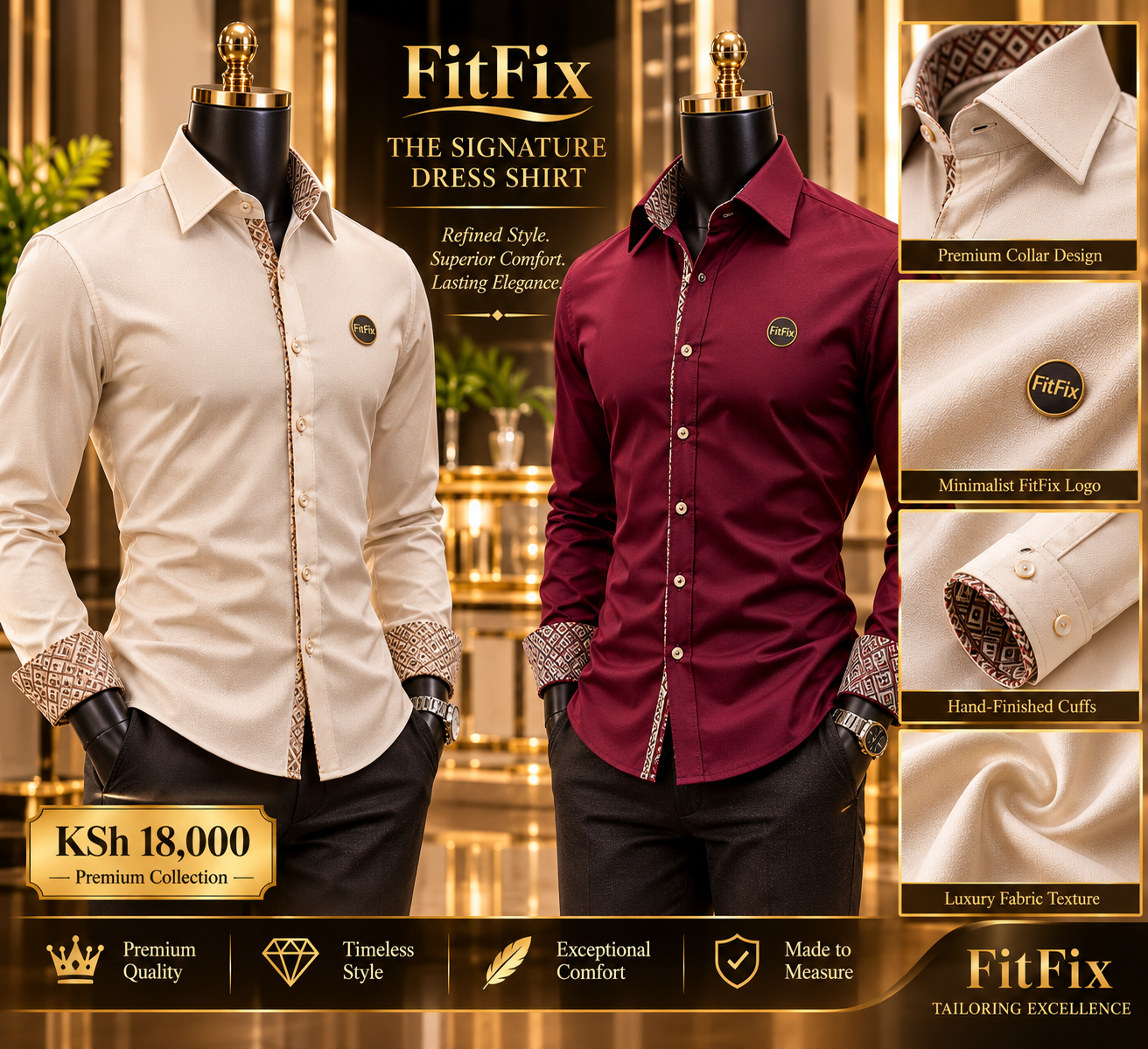
Section 7: The Illusion of "Custom" — Why Your Measurements Don't Matter to a Cheap Tailor

"In Section 6, we exposed the hidden financial costs of a cheap suit. But there is a technical deception that cuts even deeper: the lie of the 'custom fit.' You walk into a cheap tailor's shop, they wrap a tape measure around your chest, waist, and inseam, and they tell you they are making a suit 'just for you.' What they don't tell you is that they are using a standard factory pattern, and they have absolutely no intention of tailoring it to your actual body. They are about to dress you in a costume that fits everyone—and therefore fits no one."

True bespoke tailoring is an art form that borders on architectural engineering. It requires an intimate understanding of human anatomy, posture, and movement. A master tailor does not just measure your circumference; they measure your shoulder slope, your spinal curvature, the prominence of your chest, and the flatness of your seat. They draft a unique paper pattern from scratch, specifically for your body, which is then used to cut the fabric.

The cheap tailor does none of this. At FitFix Clothes Alterations, we have seen the disastrous results of this deception hundreds of times. We call it the "Block Pattern Trap." Here is exactly what is happening behind the curtain when you order a cheap custom suit.

The word "custom" has been hijacked. In the cheap tailoring industry, it has been stripped of its meaning. A cheap tailor will use the word "custom" to describe a garment that is made from a standard template, measured with a tape, and adjusted with a few quick alterations. This is not custom. This is assembly. And the difference matters more than most clients realize.

The Block Pattern Trap: What "Custom" Really Means

When a cheap tailor takes your measurements, they are not drafting a new pattern. They are reaching for a pre-existing "block pattern"—a standard template for a size 40 Regular, a size 42 Long, or a size 38 Short.

These templates are mass-produced and designed for an imaginary "average" human being. But an average human being does not exist. You might have the chest of a size 42, the waist of a size 40, and a stooped posture that requires a completely different shoulder cut.

The cheap tailor will take your size 42 block, lay it on the fabric, cut it, and sew it together. If it is too big in the waist, they will hack at the side seams at the very end to take it in. If the sleeves are too long, they will chop them off. This is not bespoke tailoring; this is butchery. It results in a garment that feels fundamentally wrong, no matter how many alterations they attempt.

The History of the Block Pattern

To understand why the block pattern is such a problem, you need to understand where it came from. Block patterns were not designed for bespoke tailoring. They were designed for mass production—specifically, for military uniforms in the 19th and early 20th centuries.

When armies needed to clothe thousands of soldiers quickly, they could not draft individual patterns for each man. Instead, they developed a system of standard sizes—Small, Medium, Large, and so on—based on statistical averages. Each size was represented by a block pattern, and each soldier was assigned the size that fit him best.

This system worked well for its purpose. It allowed armies to produce uniforms at scale, quickly and cheaply. But it was never intended for bespoke tailoring. It was never intended to produce garments that fit individual bodies with precision. It was a compromise—a way to clothe the masses, not a way to dress the individual.

When cheap tailors adopted the block pattern system, they inherited all of its limitations. They are using a tool designed for mass production to create garments that are supposed to be custom. This is a fundamental contradiction, and it is why their garments never quite fit.

The Sausage vs. The Tent

Because they are using a block pattern, the finished garment will inevitably fall into one of two categories:

1. The Sausage Casing: If you have a broader chest or larger thighs, the cheap tailor will try to force you into a smaller block pattern to make you look "slimmer." The result is a jacket that pulls tightly across the chest, restricts your arm movement, and buttons with visible strain. The trousers will cling to your thighs and leave nothing to the imagination. You will feel like you are suffocating.

We have seen clients who could barely lift their arms in a cheap jacket. They could not shake hands. They could not reach across a table. They could not sit down without the trousers straining at the seams. The garment was not just uncomfortable—it was functionally unusable.

2. The Tent: If your waist is smaller than the block pattern allows for, the tailor will leave the garment baggy. The jacket will hang off your shoulders like a box, with no waist suppression whatsoever. The trousers will billow around your legs like a parachute. You will look like a child wearing your father's suit.

We have seen clients who looked like they were wearing a costume. The jacket was so wide that it could fit two of them inside. The trousers were so baggy that they could barely walk without tripping. The garment was not just unflattering—it was embarrassing.

These two outcomes—the sausage and the tent—are the inevitable result of the block pattern. The tailor is trying to force your body into a template, rather than building a template around your body. And your body will always lose that fight.

Why You Cannot "Alter" Your Way Out of a Block Pattern

Some clients believe that a good tailor can fix a block pattern with alterations. They think that if the jacket is too big, it can be taken in. If the trousers are too long, they can be shortened. If the shoulders are too wide, they can be reduced.

This is partially true, but only up to a point. A skilled tailor can make small adjustments to a well-made garment. But a block pattern is fundamentally the wrong shape for your body. No amount of alteration can fix a garment that was never designed for you.

Here is why:

This is why we say that a block pattern cannot be "customized." It can only be hacked at. And the result will never be a garment that fits you properly.

Premium Men's 3-Piece Suit by FitFix Nairobi

Click the image to explore our premium made-to-measure men's suits.

The Missing Fitting: The "One and Done" Disaster

In true bespoke tailoring, the process involves multiple fittings. First, there is the "basted fitting," where the garment is loosely stitched together to check the overall balance and drape. Then there is the "forward fitting," where the collar, sleeves, and pockets are finalized. Only then does the tailor complete the final stitching.

The cheap tailor does not do this. They measure you once, take your deposit, and you do not see the garment again until the day you pick it up. Why? Because multiple fittings take time, and time is money. They are running a high-volume, low-margin business. They cannot afford to have you stand in their shop while they pin and adjust the garment.

This means that by the time you see the final product, it is too late to fix the fundamental flaws in the pattern. You cannot fix a block pattern that is the wrong shape for your body by simply taking in a side seam. The proportions are wrong from the start. The shoulders will never sit right. The armholes will always be too low or too tight. The garment is permanently compromised.

What Happens at a Real Fitting

To understand what you are missing, let us walk you through what actually happens at a real bespoke fitting. This is the process that a master tailor follows—and it is the process that the cheap tailor skips entirely.

The Basted Fitting: This is the first fitting, and it is the most important. The garment is held together with temporary white stitches—basting stitches—so it can be adjusted without leaving permanent marks on the fabric. At this fitting, the tailor checks:

At the basted fitting, the tailor is looking for problems. They are looking for the ways the garment does not fit your body. They are looking for the adjustments that need to be made before the garment is permanently sewn. This is the moment where a master tailor earns their fee.

The Forward Fitting: This is the second fitting, and it happens after the basted fitting has been adjusted. At this stage, the collar, sleeves, pockets, and buttonholes are finalized. The tailor checks:

At the forward fitting, the tailor is fine-tuning the details. They are making sure that every element of the garment is in the right place. They are making sure that the garment is not just wearable, but beautiful.

The Final Fitting: This is the last fitting, and it happens after the garment is complete. The tailor checks the overall fit one last time, ensures that the garment has been properly pressed, and presents it to the client. If there are any final adjustments needed—a button moved, a seam let out—they are done at this stage.

This is what a real bespoke process looks like. It is a collaboration between the tailor and the client. It is a series of conversations, adjustments, and refinements. It is slow, meticulous, and deeply personal.

The cheap tailor skips all of this. They measure you once, and they hope for the best. And when the garment does not fit, they blame your body—or they simply disappear.

Why Cheap Tailors Skip Fittings

There are two reasons why cheap tailors skip fittings. The first is time. A proper bespoke process takes weeks, sometimes months. Each fitting is a separate appointment, and each appointment takes an hour or more. The cheap tailor cannot afford to spend that much time with a single client. They have too many other clients waiting.

The second reason is skill. Fittings require a deep understanding of tailoring. The tailor has to look at the garment on your body and know exactly what needs to change. This is a skill that takes years to develop. Many cheap tailors simply do not have it. They can sew a straight seam, but they cannot diagnose a balance problem. They can attach a sleeve, but they cannot adjust a sleeve pitch.

So instead of admitting their limitations, they skip the fittings entirely. They deliver a garment that "sort of" fits, and they hope the client will not notice. And in many cases, the client does not notice—because they do not know what a proper fit looks like. They have never experienced one.

The Ego of the Cheap Tailor

When you try on the garment and it fits poorly, the cheap tailor will rarely admit their mistake. Instead, they will insult your body. "You are standing weird," they might say. "You have one shoulder lower than the other." Or, "You told me you wanted a slim fit, that's why it's tight."

They are deflecting. They are blaming your body for not matching their mass-produced block pattern. A true master tailor knows that bodies are imperfect. They expect asymmetry. They expect a certain posture. And they draft the pattern to accommodate and flatter that reality. We do not blame the client for their body; we celebrate it by creating a garment that fits flawlessly.

The "You're the Problem" Defense

This is one of the most insidious aspects of the cheap tailoring experience. When the garment does not fit, the tailor immediately goes on the defensive. They do not say, "I made a mistake." They say, "You are the problem."

Here are some of the things we have heard from clients who were told by their previous tailor:

These statements are not just unprofessional—they are cruel. They are designed to make you feel like the problem is your body, not the tailor's work. They are designed to make you accept the garment, even though it does not fit, because you believe there is nothing that can be done.

This is a lie. A skilled tailor can fit any body. They can accommodate a sloped shoulder. They can accommodate a stoop. They can accommodate a short neck, a large chest, a wide hip, a narrow waist. The whole point of bespoke tailoring is that it is built around your body—not the other way around.

When a tailor blames your body for their failure, they are admitting that they are not a master tailor. They are admitting that they do not have the skill to draft a proper pattern. They are admitting that they have been selling you a block pattern all along.

The "Slim Fit" Excuse

Another common deflection is the "slim fit" excuse. When a client complains that the jacket is too tight, the tailor says, "You asked for a slim fit. That's the style."

This is a bait-and-switch. A slim fit is a legitimate style—it is a cut that follows the contours of the body more closely than a traditional fit. But a slim fit should still be comfortable. You should be able to move, breathe, and sit down without the garment pulling or straining.

A slim fit that is uncomfortable is not a slim fit. It is a badly made garment. The tailor is using the "slim fit" label to excuse their own incompetence. They cut the garment too small, and now they are trying to convince you that the discomfort is a feature, not a bug.

At FitFix, we know the difference between a slim fit and a suffocating fit. We know how to cut a garment that follows your body while still allowing you to move, breathe, and live. A slim fit should feel like a second skin, not a straitjacket.

What 20 Measurements Actually Tell a Tailor

We have mentioned several times that we take over 20 measurements for every garment. Some clients have asked us why we need so many. After all, a cheap tailor only takes three or four measurements—shouldn't that be enough?

The answer is no. Three or four measurements tell a tailor very little about your body. They tell the tailor your basic size, but they do not tell the tailor how your body is shaped. And in tailoring, shape is everything.

Here are some of the measurements we take, and what each one tells us:

Each of these measurements tells the tailor something specific about your body. Together, they form a complete picture. They allow the tailor to draft a pattern that is truly unique to you—not a block pattern, but a pattern that is yours and yours alone.

A cheap tailor takes three or four measurements. They are not drafting a pattern. They are matching you to a block. And the result will never fit as well as a garment that was made for you.

Stop letting cheap tailors fit you into a box. Experience the flawless drape of a suit engineered for your exact anatomy. WhatsApp us today to book a consultation: 0705 728 896.

The FitFix Difference: True Anatomical Drafting

At FitFix, we do not use block patterns. We do not believe that you should have to compromise your body to fit a factory template. When you commission a suit from us, we take over 20 specific measurements. But we do not stop there.

Posture Analysis

Are your shoulders perfectly horizontal, or do you have a natural slope? Do you stand with your chest out, or are your shoulders slightly stooped? We analyze how you hold your body, and we draft the pattern to accommodate it.

Posture is one of the most important—and most overlooked—elements of a well-fitted garment. A person who stands with a slight stoop will find that a standard jacket pulls at the back and lifts at the front. A person who stands with an exaggerated arch will find that the jacket's front hangs open. A person with a sloped shoulder will find that the jacket's shoulder line collapses or wrinkles.

At FitFix, we take the time to analyze your posture from multiple angles. We look at how you stand, how you walk, and how you sit. We ask you to reach forward, to sit down, and to turn your head. We are looking for the subtle ways your body moves and holds itself. And we draft the pattern to accommodate those movements.

Asymmetry

Very few people have perfectly symmetrical bodies. One shoulder is often slightly higher than the other, or one hip slightly wider. We measure both sides of your body separately to ensure the garment hangs perfectly balanced.

Asymmetry is not a flaw. It is a fact of human anatomy. But a block pattern cannot accommodate asymmetry. A block pattern is designed for a perfectly symmetrical body—a body that does not exist. At FitFix, we draft patterns for real bodies, with all their asymmetries and imperfections.

If your right shoulder is lower than your left, we cut the right shoulder of the jacket to match. If your left hip is wider than your right, we cut the left trouser leg to match. The result is a garment that hangs perfectly level, even though your body is not perfectly level.

The Drop

This is the difference between your chest measurement and your waist measurement. A standard suit might have a 6-inch drop. But if your drop is 8 inches, a standard suit will always be baggy in the waist. We cut the pattern specifically to your drop, ensuring a sharp, tapered silhouette.

The drop is one of the most important measurements for a jacket. It determines the silhouette—whether the jacket is boxy or tapered, whether it flatters your body or fights it. A jacket with a 6-inch drop that is worn by someone with an 8-inch drop will always look baggy and shapeless. The tailor might try to take in the waist, but they can only take in so much before the pockets start to move and the proportions get thrown off.

At FitFix, we cut the pattern to your exact drop. This means the jacket is tapered correctly from the start, with no need for aggressive alterations. The result is a garment that fits like it was made for you—because it was.

The Seat and Thigh

We measure your glutes and thighs to ensure the trousers have the correct rise and drape. If you cycle or play sports, you need extra room in the thighs without the waist being too large. We cut the pattern to fit you, not a generic template.

The seat and thigh are the most commonly overlooked measurements in cheap tailoring. A block pattern is designed for an average seat and an average thigh. But many people—especially athletes, cyclists, and people who sit for a living—have a larger seat or thicker thighs than the average. When they wear a block-pattern trouser, the fabric pulls across the seat, the rise is too low, or the thighs are too tight.

At FitFix, we measure your seat and thigh separately. We cut the pattern to accommodate your specific shape. The result is a pair of trousers that fits comfortably without being baggy, and flatters your body without being tight.

This is why our Executive Suits look so different from a cheap tailor's work. The fit is not an accident; it is the result of meticulous, anatomical drafting.

Real Stories: When "Custom" Isn't Custom

To understand the impact of block patterns, you need to hear from the people who have lived through it. These are real clients who have come to us at FitFix after a bad tailoring experience, and they illustrate exactly how the "custom" promise becomes a lie.

Story 1: The Man Who Could Not Lift His Arms

A client—let's call him Mark—came to us after a frustrating experience with a cheap tailor. He had ordered a "custom" suit for a wedding, and the tailor had promised him a perfect fit. When Mark tried on the suit, he could barely lift his arms. The armholes were too small, the shoulders were too wide, and the jacket pulled tightly across his chest.

Mark went back to the tailor. The tailor told him, "You have a large chest. There is nothing I can do." Mark believed him. He wore the suit to the wedding, and he spent the entire day in discomfort. He could not dance. He could not shake hands comfortably. He could not even reach for a glass of water without the jacket pulling awkwardly.

When Mark came to us, we took one look at the suit and knew exactly what had happened. The tailor had used a block pattern that was too small for Mark's chest, and had tried to compensate by widening the shoulders. The result was a garment that fit no part of his body correctly.

We made Mark a new suit from scratch. We took over 20 measurements. We drafted a pattern that accommodated his chest without restricting his movement. We conducted multiple fittings to ensure the fit was perfect. When Mark tried on the finished suit, he could lift his arms, shake hands, and dance without any restriction. He told us it was the first time he had ever worn a suit that felt like it was actually made for him.

Story 2: The Woman Who Was Told She Had a "Difficult Body"

A client—let's call her Alice—came to us after a particularly painful experience with a cheap tailor. She had ordered a custom skirt suit for a boardroom presentation, and the tailor had promised her a sharp, professional look. When Alice tried on the suit, the jacket was too tight across the bust, the skirt was too long, and the shoulders were too wide.

Alice went back to the tailor. The tailor told her, "You have a difficult body. You are not a standard size." Alice was devastated. She had always been self-conscious about her body, and the tailor's words confirmed her worst fears. She believed that the problem was her, not the garment.

When Alice came to us, we took one look at the suit and knew immediately what had happened. The tailor had used a block pattern that was designed for a body with a smaller bust and narrower shoulders. The jacket was not made for Alice's body—it was made for a different body entirely.

We made Alice a new suit from scratch. We took over 20 measurements. We drafted a pattern that accommodated her bust, her shoulders, and her waist. We conducted multiple fittings to ensure the fit was perfect. When Alice tried on the finished suit, she burst into tears. She told us she had never felt so confident and so beautiful in her life. She wore the suit to her boardroom presentation, and she got the promotion.

This is the difference between a block pattern and a true bespoke garment. A block pattern tells you that your body is the problem. A true bespoke garment tells you that your body is beautiful—and the garment is designed to celebrate it.

Premium Made-to-Measure Ladies' Skirt Suit by FitFix Nairobi

Click the image to explore our bespoke executive garments.

The Magic of the Basted Fitting

Even with the best measurements in the world, a garment needs to be tested on the moving, breathing human body. This is why we insist on the basted fitting for all our made-to-measure suits.

At the basted fitting, the suit is held together with temporary white stitches. We ask you to sit down, stand up, walk around, and reach forward as if you are driving a car or shaking a hand. We watch how the fabric moves. We check the sleeve pitch to ensure the sleeves do not twist. We check the collar to ensure it hugs the back of your neck.

This is the moment we catch the errors that a block pattern would have created. We can adjust the shoulder slope, move the pockets, or reshape the armhole. It is a collaborative process between the tailor and the client. It takes time, but it is the only way to guarantee a perfect fit.

The cheap tailor skips this entirely. They do not want to see you in the garment until it is finished. By then, the fabric is cut, the seams are sewn, and the garment is rigid. If it does not fit, they will try to patch it up with suit alterations, but the damage is already done.

The Difference Between a Fitting and a "Try-On"

Many cheap tailors will tell you that they offer a "fitting." But what they mean is a try-on. You come to the shop, you put on the finished garment, and they ask you how it feels. If you say it feels fine—or if you do not know what "fine" is supposed to feel like—they send you on your way.

This is not a fitting. It is a transaction. A real fitting is a diagnostic process. The tailor is not asking you how the garment feels; they are looking at how the garment fits. They are looking for the subtle signs of imbalance—the way the jacket pulls, the way the sleeves hang, the way the collar sits. They are looking for the things you might not notice, but that will bother you later.

At FitFix, a fitting is a conversation. We ask you questions. We listen to your feedback. We make adjustments based on what we see and what you feel. We do not finish the garment until we are both completely satisfied.

Why We Insist on Multiple Fittings

Some clients are surprised to learn that we insist on multiple fittings. They have never experienced this before. They are used to a single measurement session and a single pickup. They wonder why they need to come back two or three times.

The answer is simple: a garment is not a static object. It changes as it is constructed. The basted fitting reveals things that the measuring session cannot. The forward fitting reveals things that the basted fitting cannot. Each fitting is a new opportunity to refine the garment, to make it better, to make it more perfectly yours.

We insist on multiple fittings because we care about the result. We are not satisfied with a garment that "sort of" fits. We want a garment that fits perfectly—one that makes you feel confident, comfortable, and beautiful. And that requires time, attention, and collaboration.

The Posture Problem: Why Your Tailor Needs to Look at Your Back

One of the most overlooked elements of a custom fit is posture. When a cheap tailor measures you, they usually stand in front of you. They measure your chest, your waist, and your arms. They rarely look at your back.

But the back of the suit is just as important as the front. If you have a slight stoop, or a prominent curve in your upper spine, a standard suit jacket will pull at the back and lift up at the front. The collar will gap at the neck. The vents will flare open.

At FitFix, we analyze your posture from the side. We look at the curve of your spine and the position of your neck. We adjust the back pattern pieces to ensure the jacket sits flat against your back, regardless of how you stand. This is a detail that cheap tailors simply do not have the time or the skill to address.

When you wear a FitFix suit, you will notice that the jacket does not ride up when you sit. The collar stays glued to your neck. The shoulders remain perfectly horizontal. This is because the garment was drafted for your posture, not a generic block.

The Three Posture Types

In tailoring, there are three main posture types: erect, normal, and stooped. Each posture type requires a different pattern adjustment.

At FitFix, we identify your posture type during the measurement session. We then draft the pattern to accommodate your specific posture. This is why our garments fit so well—they are designed for your body, not a generic template.

The Back View: The Most Overlooked Angle

Most cheap tailors only look at you from the front. They measure your chest, your waist, and your shoulders. They do not look at your back. They do not see the way your spine curves, the way your shoulders slope, or the way your jacket pulls at the back.

At FitFix, we always look at you from the back. We want to see how the garment sits against your spine. We want to see if the collar gaps. We want to see if the vents flare. We want to see if the shoulders slope evenly. These are the details that separate a good fit from a great fit.

When you wear a FitFix suit, you will notice that the back is just as beautiful as the front. The jacket sits flat against your back. The collar hugs your neck. The vents lie flat. The shoulders are perfectly level. This is because we designed the garment to fit your back, not just your front.

Questions to Ask Before You Commit

If you are considering a custom garment, ask your tailor these questions. Their answers will tell you whether they are a true bespoke tailor or a block-pattern assembler.

If the tailor cannot answer these questions confidently, or if they become defensive, walk away. There are honest professionals out there who will treat you with respect. Do not settle for less.

Experience True Bespoke Tailoring

Stop settling for a "custom" suit that fits like a standard size. Experience the difference of a garment drafted from scratch for your unique body. Book your private consultation with David today.

Book Your Private Fitting

Free pickup and delivery across Nairobi.

Section 8: The Ghosting Phenomenon — When Your Tailor Disappears (And Why Mobile Tailors Are a Gamble)

"In Section 7, we exposed the illusion of the 'custom' fit—the block patterns used to churn out generic garments. But what happens when the tailor realizes they are in over their head? What happens when the deadline is approaching, the fabric is ruined, and they know they cannot deliver? In the world of the 99%, there is only one survival tactic left: they disappear. They ghost you."

If you have ever been ghosted by a tailor, you know the unique panic it induces. It starts with a missed call. Then a text message that goes unread. Then, you arrive at their shop, only to find the doors locked and the lights off. The phone number you were given is switched off. The person who promised you a bespoke suit or a wedding dress has vanished into thin air, taking your deposit and your expensive fabric with them.

At FitFix Clothes Alterations, we have helped countless clients recover from this trauma. We have seen brides in tears because their tailor disappeared a week before the wedding. We have seen grooms scrambling to find a ready-made suit off the rack because their custom order was never fulfilled. We have seen mothers of brides standing outside locked shops, holding receipts that are now worthless.

The "ghosting" phenomenon is a hallmark of the cheap tailoring industry, and it is deeply tied to the lack of a professional, physical infrastructure. When a tailor has no workshop, no registered business, and no reputation to protect, disappearing costs them nothing. They simply move on to the next neighborhood, the next social media account, the next group of unsuspecting clients.

In this section, we are going to dissect the ghosting phenomenon in detail. We will show you how it works, why it happens, what it costs you, and how to protect yourself from ever becoming a victim.

The Anatomy of a Ghosting: How It Unfolds

Ghosting is not usually a sudden event. It is a process—a gradual withdrawal that unfolds over days or weeks. Understanding this process can help you recognize the warning signs before it is too late.

Stage 1: The Reassurance

At first, everything seems fine. The tailor is responsive and friendly. They answer your messages promptly. They assure you that your garment is "almost ready" and that you will receive it "very soon." They may even send you photos of other garments they are working on, to give you the impression that they are busy and productive.

This stage is designed to keep you calm. The tailor knows that if you start to panic, you will start to demand answers. So they give you reassurance—even if that reassurance is fabricated. They tell you what you want to hear, and they hope that you will believe them for just a little longer.

Stage 2: The Slowing

Then, the responses start to slow down. A message that used to be answered in minutes now takes hours. A phone call that used to be answered on the first ring now goes to voicemail. You tell yourself that the tailor must be busy. You give them the benefit of the doubt.

But the slowing is not an accident. It is a deliberate strategy. The tailor is testing how much silence you will tolerate. If you do not complain, they will continue to withdraw. If you do complain, they will offer a new excuse and buy themselves a little more time.

Stage 3: The Excuses

When you finally do complain, the tailor responds with an excuse. "My phone was stolen." "I was in the hospital." "There was a family emergency." "I had to travel out of town." The excuses are designed to make you feel sympathy for the tailor, rather than anger. They are designed to make you feel guilty for even asking about your garment.

If you accept the excuse, the cycle returns to Stage 1. The tailor reassures you, promises to deliver soon, and then begins to withdraw again. If you do not accept the excuse, the tailor moves to Stage 4.

Stage 4: The Silence

This is the final stage. The tailor stops responding entirely. Your calls go straight to voicemail. Your messages are left unread. You go to the shop, and it is closed—perhaps permanently. You ask around, and no one has seen the tailor in days. You realize, with a sinking feeling, that you have been ghosted.

The tailor has disappeared. Your deposit is gone. Your fabric is gone. And you have no way to recover either of them.

Stage 5: The Reappearance (Sometimes)

In some cases, the tailor will reappear weeks or months later, under a new name, at a new location, or on a new social media account. They will have a new set of promises, a new set of samples, and a new set of victims. The cycle begins again.

In other cases, the tailor never reappears. They have moved on to a different city, a different industry, or a different hustle. Your money and your fabric are gone forever.

Why Tailors Ghost: The Psychology of Disappearance

Why do tailors ghost? What drives someone to take a client's money, promise them the world, and then disappear without a word? The answer lies in a combination of desperation, shame, and the absence of consequences.

1. The Math Has Collapsed

As we discussed in Sections 1 and 2, the cheap tailor operates on a broken financial model. They use your deposit to pay for someone else's fabric. They take on more work than they can handle. They promise deadlines they cannot meet.

Eventually, the math collapses. There is no more money. There is no more time. The tailor cannot deliver your garment, and they cannot refund your money. They are trapped. And the only way out is to disappear.

2. The Shame of Failure

Many cheap tailors are not malicious. They are simply overwhelmed. They started their business with good intentions, but they were never able to manage the financial and operational challenges of running a legitimate enterprise. When things fall apart, they are consumed by shame.

The shame makes it hard for them to face their clients. They cannot look you in the eye and admit that they have failed. So they hide. They avoid your calls. They avoid your messages. They avoid the confrontation that would force them to admit the truth.

This is not an excuse. It is an explanation. Even if the tailor is not malicious, the result is the same: you are left with nothing.

3. The Absence of Consequences

In the informal economy, there are few consequences for ghosting. The police are unlikely to pursue a case over a few thousand shillings. The legal system is too slow and expensive to be practical. The tailor can simply change their phone number, move to a new location, and start over.

This absence of consequences is what makes ghosting such an attractive option for the cheap tailor. They know they can get away with it. They know that the worst that will happen is that they will lose a few clients—and they can always find new ones.

The Mobile Tailor Trap

In recent years, there has been a rise in "mobile tailors"—individuals who operate purely via Instagram, WhatsApp, or word-of-mouth, offering to pick up your fabric, take it to their "workshop," and return it to you. They often charge incredibly low prices because they have no shop rent to pay. It sounds convenient and affordable. It is also a massive gamble.

When a mobile tailor takes your fabric, where does it go? If they do not have a dedicated workshop, they are likely sewing on a machine in their living room, a shared hostel room, or a cramped, unventilated backroom. There is no quality control. There is no supervisor. There is no guarantee that your fabric is being handled in a clean, safe environment. It might be stored on the floor, exposed to pets, or damaged by dampness.

More importantly, when things go wrong—and with cheap tailors, they always do—you have no physical address to go to. You cannot show up at their doorstep and demand your garment. They can simply block your number, delete their social media account, and disappear. You are left with a receipt that means nothing and a bank transfer that cannot be reversed.

How the Mobile Tailor Economy Works

The mobile tailor economy is built on convenience and trust. Here is how it typically operates:

This is the reality of the mobile tailor economy. It works beautifully for the tailor, who has no overheads and no accountability. It works terribly for the client, who has no recourse and no protection.

Why Mobile Tailors Are Riskier Than Shop-Based Tailors

Mobile tailors are riskier than shop-based tailors for several reasons:

This is not to say that all mobile tailors are bad. Some are talented, honest professionals who simply prefer to work from home. But the risks are far higher than with a shop-based tailor, and you have far less recourse if something goes wrong.

The Red Flags of a Ghost Mobile Tailor

If you are considering working with a mobile tailor, watch for these red flags:

If you see any of these red flags, walk away. There are plenty of honest tailors out there. You do not need to gamble with a mobile ghost.

Premium Men's Overcoat by FitFix Nairobi

Click the image to explore our premium made-to-measure outerwear.

The Risks to Your Expensive Fabric

When you buy a premium fabric—whether it's Italian wool for a made-to-measure suit or a delicate lace for a wedding dress—it is an investment. A mobile or cheap tailor treats your fabric as a commodity, not an asset.

If they disappear, your fabric is gone. If they cut the fabric incorrectly, it cannot be uncut. If they spill oil on it, or if their iron burns it, there is no way to replace it. We have had clients bring us fabric that was returned by a bad tailor, completely ruined. It was the wrong length, the wrong cut, and there was no way to salvage it. The client had to go back and buy the fabric all over again, losing both the original fabric cost and the deposit they paid the tailor.

What Happens to Your Fabric When the Tailor Ghosts

When a tailor ghosts, your fabric does not simply disappear. It is still somewhere. But where? Here are the most likely scenarios:

This is why it is so important to work with a tailor who has a physical address and a secure workshop. Your fabric is your property. It should be treated with respect.

How to Protect Your Fabric

Before you hand over your fabric to any tailor, take these precautions:

A professional business like FitFix protects your fabric. We have a secure, dedicated workshop in Industrial Area. We have industrial racks for fabric storage, professional cutting tables, and a team of tailors who work in a clean, organized environment. Your fabric is tagged with your name and tracked through every stage of the process. It is never left on a floor, and it is never taken to a third-party location.

Real Stories: When the Tailor Vanishes

To understand the impact of ghosting, you need to hear from the people who have lived through it. These are real clients who have come to us at FitFix after being ghosted by a previous tailor. Their stories illustrate exactly how devastating this experience can be.

Story 1: The Bride Who Lost Her Dress and Her Deposit

A bride—let's call her Faith—commissioned a custom wedding dress from a mobile tailor she found on Instagram. The tailor's feed was full of beautiful dresses, glowing testimonials, and elegant photoshoots. Faith was impressed. She sent a deposit of KSh 20,000 and her fabric—an expensive lace she had imported from Dubai.

For the first two weeks, the tailor was responsive. She sent photos of the fabric being cut. She promised the dress would be ready in a month. Faith felt confident.

Then, the messages started to slow. Faith would send a question, and it would take days to get a response. Then the responses stopped entirely. Faith called the number she had been given, and it was switched off. She tried to find the tailor's physical address, but there wasn't one—she had only ever communicated via Instagram.

Two weeks before the wedding, Faith had no dress, no deposit, and no fabric. She had to buy an off-the-rack dress at the last minute, and it did not fit properly. Her wedding photos are a reminder of the dress she never got to wear.

Faith never recovered her deposit or her fabric. The tailor's Instagram account disappeared and reappeared under a different name a few months later, with a new set of testimonials and a new set of promises.

Story 2: The Executive Who Lost a Client's Fabric

An executive—let's call him Kevin—was preparing for a major client presentation. He had purchased a premium Italian wool fabric—at a cost of KSh 30,000—and commissioned a cheap tailor to make him a custom suit. The tailor promised the suit would be ready in two weeks.

Two weeks passed. No suit. Kevin called the tailor. The tailor reassured him, "It's almost ready. Come tomorrow."

Tomorrow came and went. The tailor stopped answering his phone. Kevin went to the shop, and the doors were locked. The tailor had disappeared—along with Kevin's fabric and his deposit.

Kevin had no time to buy new fabric. He had no time to find another tailor. He had to wear an old suit to the presentation—one that did not fit well and looked dated. He did not perform at his best. He did not get the client.

The financial loss was significant—KSh 30,000 for the fabric, plus the lost client deal. But the emotional toll was even greater. Kevin had trusted the tailor. He had invested in premium materials. And he had been betrayed.

Story 3: The Family That Lost a Wedding

A family—let's call them the Kimanis—commissioned five matching outfits from a cheap tailor for a family wedding. The tailor promised to deliver all five outfits in three weeks. The family paid a substantial deposit, including a premium fabric that had been shipped from overseas.

Three weeks passed. No outfits. The tailor stopped answering calls. The family went to the shop, and it was closed. They found out later that the tailor had been evicted for unpaid rent—and had taken their fabric with him.

The wedding was in one week. The family had no time to commission new outfits. They had no time to find a replacement tailor. They had to scramble to find ready-made outfits for five people, in a style that did not match their original vision, in a fabric that did not match their original plan.

The wedding went ahead, but it was not the wedding they had dreamed of. The outfits did not match. The photos look different from what they had envisioned. And every time they look at those photos, they remember the tailor who ghosted them.

Don't let a ghost tailor steal your peace of mind. Trust a registered, professional business with a physical workshop. WhatsApp us today to book a consultation: 0705 728 896.

The Legal Vacuum: Why You Can't Just Sue

You might be wondering: why don't ghosted clients just sue? Why don't they report the tailor to the police? The answer is complicated, and it reveals why ghosting is such a devastating experience.

The Cost of Legal Action

In Kenya, the cost of filing a lawsuit is often far greater than the value of the garment. For a suit worth KSh 10,000, the legal fees might be KSh 30,000 or more. Even if you win the case, you may not be able to recover your money—especially if the tailor has no assets or has disappeared.

The legal process is also slow. A civil case can take months or years to resolve. By the time you get a judgment, the tailor has moved on to a new city, a new name, and a new set of victims.

The Police Report

You can report the tailor to the police, but the outcome is rarely satisfying. The police are overwhelmed with more serious crimes. A dispute over a custom garment is unlikely to be prioritized. Even if the case goes to court, the tailor may simply deny the allegations or claim that the client is lying. Without written contracts and clear evidence, it is often the client's word against the tailor's.

In some cases, the police may classify the matter as a "civil dispute" rather than a criminal offense. This means you will be advised to pursue the matter through civil courts—which, as we have seen, is often impractical.

The Social Media Report

In the digital age, some clients try to take justice into their own hands by reporting the tailor on social media. They post about their experience on Instagram, Facebook, or Twitter, hoping to warn others and pressure the tailor to respond.

This can sometimes work. Public shame is a powerful motivator. But it is also risky. The tailor may respond with threats or counter-accusations. They may block you and delete their account, making it harder to track them down. They may even sue you for defamation, even though their behavior was clearly unethical.

Social media reporting is not a substitute for legal action. It is a last resort—and it does not always work.

Why the Legal System Fails

The legal system fails ghosted clients for a simple reason: it is designed for larger disputes. A KSh 10,000 tailor bill is not worth the time and expense of a court case. The system is not built to handle small-scale consumer fraud, and the informal economy has filled the gap.

This is why choosing a registered, professional business is so important. A registered business has a physical address, a tax record, and a legal obligation to operate ethically. If they fail to deliver, you have legal recourse. You can report them to the authorities, seek a refund through the legal system, and hold them accountable.

A ghost tailor has no such accountability. They operate in the informal economy, outside the reach of consumer protection laws. If they steal your fabric, you have no way to recover it. You cannot sue someone who doesn't exist on paper.

The Recovery Playbook: What to Do If You've Been Ghosted

If you have been ghosted by a tailor, you may feel helpless and overwhelmed. But there are steps you can take to recover—or at least to protect yourself from further harm.

Step 1: Document Everything

Before you do anything else, gather all the evidence you have:

This evidence will be invaluable if you decide to report the tailor to the police or pursue legal action. It will also help you build a case if you decide to warn others on social media.

Step 2: Try to Locate the Tailor

Before you give up, try to locate the tailor through other means:

If you can locate the tailor, you may be able to negotiate a refund or recover your fabric. If you cannot, proceed to Step 3.

Step 3: Report to the Authorities

File a police report, even if you doubt it will lead to a conviction. The report creates an official record and may help other clients who have been ghosted by the same tailor. If enough clients report the same tailor, the police may take the matter more seriously.

You can also report the tailor to the relevant consumer protection authorities. In Kenya, this may include the Competition Authority of Kenya or the Kenya Consumer Protection Advisory Committee. These bodies may be able to investigate patterns of fraud and take action.

Step 4: Warn Others

Post about your experience on social media, Google reviews, and any other platforms where the tailor operates. Include the evidence you have gathered, and be clear and factual in your description of what happened. Do not exaggerate or use abusive language—this could undermine your credibility or expose you to legal risk.

Your review could save another client from the same fate. It is also a form of accountability—the tailor may respond when they see their reputation suffering.

Step 5: Move On

At some point, you have to accept that you may never recover your money or your fabric. This is a painful reality, but it is also a necessary one. Holding on to anger and regret will only hurt you further.

Focus on the future. Find a professional tailor who can help you with your next garment. Choose a business with a physical address, a secure workshop, and a reputation for accountability. And use your experience to make better choices in the future.

The FitFix Difference: A Fixed Address and Open Communication

At FitFix Clothes Alterations, we do not ghost our clients. We are a registered business (Reg No: BN-B8S6O3PE) with a dedicated workshop in Industrial Area. We have an open-door policy. You are always welcome to visit us, see the fabrics, meet the tailors, and check on the progress of your garment.

We provide every client with a clear delivery date in writing. We give you our contact details, and we respond to your messages during working hours. If there is an unexpected delay, we do not hide. We communicate. We explain the situation and we offer a solution.

We believe that trust is the foundation of a great tailoring experience. You are trusting us with your image, your important events, and your hard-earned money. We take that responsibility incredibly seriously. We will never vanish, we will never lie, and we will always deliver on our promises.

How We Track Every Order

From the moment your fabric arrives in our workshop, it is tagged, tracked, and protected. Here is exactly what happens to your garment at every stage:

Every step of the process is documented. If you ever have a question about your garment, we can tell you exactly where it is and what stage of production it is in. This is what transparency looks like.

Premium Made-to-Measure Ladies' Skirt Suit by FitFix Nairobi

Click the image to explore our bespoke executive garments.

The Accountability of a Registered Business

One of the most powerful protections you have as a consumer is choosing a registered business. A registered business has a physical address, a tax record, and a legal obligation to operate ethically. If a registered business fails to deliver, you have legal recourse. You can report them to the authorities, leave reviews online, and seek a refund through the legal system.

A ghost tailor has no such accountability. They operate in the informal economy, outside the reach of consumer protection laws. If they steal your fabric, you have no way to recover it. You cannot sue someone who doesn't exist on paper.

At FitFix, we are proud to be a registered, transparent business. We are part of the formal economy, and we are committed to upholding the highest standards of professionalism. We want you to feel completely safe and confident when you choose to work with us.

Why We Publish Our Registration Number

You will notice that our business registration number (BN-B8S6O3PE) is published prominently on our website and throughout our marketing materials. We do this deliberately. We want you to know that we are a real business—not a ghost, not a fly-by-night operation, not someone who will disappear with your deposit.

Publishing our registration number is a form of accountability. It means you can verify that we exist. It means you can report us if we fail to deliver. It means we have something to lose if we behave unethically.

Most cheap tailors do not publish their registration number. Most cheap tailors do not have a registration number. They operate in the informal economy, precisely because they do not want to be held accountable. We are the opposite. We are registered, we are accountable, and we are proud of it.

What to Do If You Are Unsure

If you are considering working with a tailor and you are unsure whether they are legitimate, here are some simple steps you can take:

These steps take a little time, but they can save you a lot of money and heartache in the long run.

The Final Word: You Deserve a Tailor Who Stays

You deserve a tailor who answers your calls. You deserve a tailor who delivers on time. You deserve a tailor who treats your fabric and your money with respect. You deserve a tailor who stays—who does not disappear when things get hard.

At FitFix, we are that tailor. We have been in business for fourteen years, and we plan to be in business for many more. We do not ghost our clients. We do not disappear. We do not take your money and run.

If you have been ghosted by a tailor, we are sorry. We know how devastating it can be. But we also want you to know that there are honest professionals out there. There is a better way to get your garments made. And we would be honored to be the ones who show it to you.

Book with Confidence. Book with FitFix.

Stop risking your fabric and your money on mobile, unreliable tailors. Choose a business that is accountable, transparent, and committed to your satisfaction.

Book Your Consultation Now

Free pickup and delivery across Nairobi.

Section 9: The Toxic Truth — What Is Really in That Cheap Fabric? (Health, Skin, and the Hidden Dangers)

"In Section 8, we exposed the ghosting phenomenon—the tailors who vanish with your money and your fabric. But there is a hidden danger lurking in the garments you actually receive from the 99%. We spend hours talking about fit, style, and deadlines, but we rarely talk about what the fabric is actually made of. The truth is, the cheapest fabrics on the market are often laden with toxic chemicals, synthetic plastics, and dyes that are hazardous to your health. When you wear a cheap suit or dress, you are not just wearing bad tailoring; you are wearing a chemical cocktail."

When you walk into a cheap tailor's shop and touch a fabric that feels surprisingly smooth for a low price, your brain tells you it is a bargain. But your skin is telling you something different. Within an hour of wearing a cheap polyester suit in the Nairobi heat, you start to sweat. The fabric clings to your body. It doesn't breathe. You feel a mild irritation, a slight itch, a clammy discomfort.

At FitFix Clothes Alterations, we believe that luxury is not just about how a garment looks; it is about how it feels and how it treats your body. That is why we source our fabrics from certified, reputable mills. We refuse to compromise on the health and comfort of our clients. In this section, we are going to pull back the curtain on the toxic reality of cheap fabrics and why they are a danger to your skin.

This is not a story about fashion. It is a story about chemistry. And once you understand what is actually in that KSh 1,500 "wool blend" suit, you will never look at a bargain garment the same way again.

The Chemical Cocktail of Fast Fashion

Most cheap fabrics are manufactured in unregulated factories where cost-cutting is the only priority. To make these fabrics look and feel appealing, manufacturers use a host of toxic chemicals. Each of these chemicals serves a specific purpose—softening, preserving, dyeing, or finishing—but each one comes with its own set of health risks.

Let us walk through the most common chemicals you will find in cheap fabrics, and what they do to your body.

1. Formaldehyde

Formaldehyde is a known carcinogen used in cheap fabrics to prevent wrinkling and to keep the garment looking crisp during shipping. It is slowly released over time as you wear the garment. If you have ever bought a cheap shirt and noticed a strange, sharp smell when you opened the packaging, that is the smell of formaldehyde. It can cause severe skin irritation, respiratory issues, and allergic reactions.

Formaldehyde is particularly dangerous because it does not wash out easily. Even after several washes, traces of formaldehyde can remain in the fabric, continuing to release into the air and onto your skin. For people with sensitive skin or respiratory conditions like asthma, this can be a serious problem.

In countries like the European Union, formaldehyde in clothing is tightly regulated. The maximum allowable concentration in textiles is strictly limited, and for certain categories—such as clothing for babies—it is effectively banned. In the informal markets of Nairobi, there are no such regulations. A cheap shirt or suit can contain formaldehyde at levels that would be illegal in Europe or the United States.

2. Azo Dyes

Azo dyes are a class of synthetic dyes used to create bright, vibrant colors cheaply. They are incredibly common in the low-end textile market. When they come into contact with your sweat, they can break down and release carcinogenic compounds called aromatic amines. These are easily absorbed through your skin. In Europe, many azo dyes are banned for this exact reason. In the informal markets of Nairobi, they are used every day.

Azo dyes are particularly problematic because they are used to create the vibrant colors that make cheap fabrics attractive. A cheap suit that looks bright and bold on the shelf may be filled with azo dyes that are slowly releasing toxins into your skin. The brighter the color, the more likely the fabric is to contain azo dyes—especially for reds, oranges, and yellows.

The health effects of azo dyes are serious. Prolonged exposure has been linked to bladder cancer, liver damage, and other serious conditions. The skin is a highly absorbent organ, and when you wear a cheap garment against your skin, you are effectively exposing yourself to a continuous low dose of toxic dye.

3. Heavy Metals

Cheap fabrics often contain traces of heavy metals like lead, cadmium, and mercury, which are used in the dyeing process. Long-term exposure to these metals can cause serious health issues, including neurological damage and organ failure. A high-quality suit from a reputable mill is certified free of these toxins.

Heavy metals are particularly insidious because they accumulate in the body over time. Unlike some chemicals that are flushed out by the kidneys, heavy metals can build up in the liver, brain, and bones, causing damage that only becomes apparent years later. For children, who are particularly vulnerable to heavy metal exposure, this is a serious concern.

4. Phthalates

Phthalates are a class of chemicals used to soften plastics and synthetic fabrics. They are commonly found in cheap polyester blends, and they are particularly common in printed garments where the ink contains plasticizers. Phthalates are endocrine disruptors, meaning they can interfere with the body's hormone system.

Research has linked phthalate exposure to a range of health problems, including reproductive issues, developmental delays in children, and an increased risk of certain cancers. Like many of the chemicals in cheap fabrics, phthalates are easily absorbed through the skin and can be inhaled as they off-gas from the fabric.

5. Flame Retardants

Some cheap fabrics, particularly those designed for children's clothing, are treated with flame retardant chemicals. While the intention is to make the garments safer, many flame retardants are themselves toxic. Some are known endocrine disruptors, and others have been linked to developmental problems.

In most cases, flame retardants are unnecessary for adult clothing. A wool suit, for example, is naturally flame resistant without any chemical treatment. A cheap polyester suit, however, may be treated with flame retardants to meet minimum safety standards—chemicals that you then absorb through your skin.

6. Chlorinated Solvents

Chlorinated solvents are used in the manufacturing of some cheap fabrics, particularly to clean and prepare the fibers before weaving. They can leave residue in the finished garment, which is then transferred to your skin when you wear it. Prolonged exposure to chlorinated solvents has been linked to liver damage, kidney damage, and neurological problems.

The Cumulative Effect

The most important thing to understand about these chemicals is that they are cumulative. Individually, the amount of formaldehyde in a single cheap shirt might be small. The amount of azo dye in a single cheap dress might be small. But when you wear cheap garments every day—day in, day out—you are exposing your body to a continuous, low-level cocktail of toxic chemicals.

Over time, this exposure can build up. Your liver and kidneys have to process these toxins continuously. Your immune system has to fight off the inflammation they cause. Your skin has to cope with the irritation and allergic reactions they trigger. This is not a single dramatic event—it is a slow, silent process that unfolds over years.

And it is entirely preventable. By choosing garments made from certified, non-toxic fabrics, you can dramatically reduce your exposure to these chemicals—and protect your health for the long term.

The Climate Problem: Why Cheap Fabric is Dangerous in Nairobi

Nairobi is a beautiful city with a warm, sometimes humid climate. Your body needs to breathe to regulate its temperature. Cheap fabrics—mostly polyester, nylon, and acrylic—are essentially plastic woven into thread. They do not breathe.

When you wear a cheap suit in Nairobi, your body heat is trapped. You sweat profusely, but the sweat cannot evaporate because the plastic fabric blocks it. You are essentially wearing a sauna suit. This creates a breeding ground for bacteria and fungal infections. If you have ever noticed a rash or breakouts on your back or chest after wearing a cheap garment, it is likely because the fabric trapped sweat and bacteria against your skin.

The Science of Breathability

Natural fibers like wool, cotton, and silk are breathable because of their structure. At a microscopic level, these fibers are composed of millions of tiny pores and channels that allow air to flow through them. When you sweat, the moisture is wicked away from your body and evaporates through the fabric, keeping you cool and dry.

Synthetic fibers like polyester, nylon, and acrylic are fundamentally different. They are made from long, continuous filaments of plastic—they have no pores, no channels, and no capacity to absorb moisture. When you sweat, the moisture has nowhere to go. It pools against your skin, creating a damp, warm environment that is ideal for bacteria and fungi.

This is why cheap suits feel clammy and uncomfortable. It is not just about the climate—it is about the fundamental structure of the fabric. No matter how thin or "lightweight" a synthetic fabric claims to be, it cannot match the breathability of natural wool or cotton.

The Nairobi Heat Test

Here is a simple test you can try the next time you are considering a cheap suit. Wear it for an hour in the middle of the day. Walk from one end of town to the other. Stand in the sun. Sit in a warm room. See how you feel.

If you feel cool, comfortable, and dry, the fabric is probably breathable. If you feel clammy, sticky, and hot, the fabric is probably cheap polyester. Your body will tell you the truth about the fabric faster than any label ever could.

Premium fabrics, like the Super 120s wool we use for our made-to-measure suits, are natural, breathable fibers. They wick moisture away from your body, keeping you dry and comfortable. They regulate your temperature, keeping you warm in the cold and cool in the heat. They do not harbor bacteria. They feel like a second skin, not a plastic bag.

The Skin Conditions You Didn't Know You Had

The most common symptoms of wearing cheap fabrics are also the most easily ignored. They show up as small, nagging issues that you attribute to stress, the weather, or "just something that happens." But in many cases, they are a direct result of the chemicals and synthetic fibers in your clothing.

Contact Dermatitis

Contact dermatitis is a red, itchy rash that appears where your skin comes into contact with an irritating substance. In the context of cheap fabrics, it is often caused by formaldehyde, azo dyes, or heavy metals. The rash can appear on your neck, chest, arms, or any other area where the fabric touches your skin.

Many people who experience contact dermatitis from clothing do not realize that the clothing is the cause. They assume they have developed an allergy to something else—soap, detergent, or even stress. But if the rash appears only when you wear a particular garment, the garment is probably the culprit.

Eczema Flare-Ups

If you have eczema, you know how painful and frustrating it can be. Flare-ups can be triggered by many things—stress, weather, diet. But one of the most overlooked triggers is cheap fabric. The synthetic fibers and chemical residues in a cheap garment can irritate sensitive skin, leading to inflammation, itching, and cracked skin.

We have spoken to clients who told us that their eczema improved dramatically when they switched to natural fiber clothing. This is not a coincidence. It is a direct result of removing the chemical irritants and allowing the skin to breathe.

Acne and Breakouts

Acne is typically associated with the face, but it can also appear on the back, chest, and shoulders—especially for people who wear cheap synthetic fabrics. The combination of trapped sweat, bacteria, and chemical residue creates an ideal environment for acne to develop.

If you notice breakouts on your back or chest that seem to appear after wearing a particular garment, the fabric is probably the cause. Switching to a breathable, natural fiber can make a significant difference.

Fungal Infections

The warm, damp environment created by synthetic fabrics is ideal for fungal growth. If you wear cheap underwear, cheap trousers, or cheap suits, you may be at higher risk for fungal infections of the skin. These infections can be persistent and uncomfortable, requiring medical treatment.

Respiratory Irritation

The chemicals in cheap fabrics do not just affect your skin—they can also affect your respiratory system. Formaldehyde and other volatile organic compounds (VOCs) off-gas from the fabric, releasing into the air around you. For people with asthma or other respiratory conditions, this can trigger symptoms like coughing, wheezing, and shortness of breath.

This is particularly concerning in the context of a suit or dress that covers a large portion of your body. The fabric is constantly releasing VOCs into the air around your face and chest, exposing you to a continuous low dose of toxic chemicals.

Premium Made-to-Measure Shirt by FitFix Nairobi

Click the image to explore our premium, breathable made-to-measure shirts.

The FitFix Guarantee: Safe, Certified Fabrics

We do not source our fabrics from the back of a truck or from an unverified supplier. We import our fabrics from certified mills in Italy, the UK, and other trusted regions. These mills adhere to strict environmental and health standards. They do not use carcinogenic dyes. They do not use formaldehyde. Their fabrics are breathable, natural, and safe.

When you buy a premium executive suit from us, you are not just investing in a garment that looks good. You are investing in a garment that feels good, that protects your skin, and that will not make you sick. We believe that health and comfort are non-negotiable, and we will never compromise on the quality of the fabrics we use.

What Certification Actually Means

You may have heard of certifications like OEKO-TEX, GOTS (Global Organic Textile Standard), or bluesign. These are not just marketing labels—they are rigorous standards that require fabrics to be tested for a wide range of harmful substances.

Here is what some of the most important certifications mean:

When you buy from a reputable tailor, ask them about the certifications of their fabrics. A professional tailor will be able to tell you exactly where the fabric comes from and what certifications it holds. A cheap tailor will not even know what you are talking about.

Our Sourcing Philosophy

At FitFix, we have spent years building relationships with fabric mills and suppliers who share our values. We do not buy from anonymous middlemen or from open markets where the origin of the fabric is unknown. We buy directly from mills that we trust, and we verify their certifications before we make a single purchase.

This costs more. Much more. A certified, non-toxic Italian wool fabric can cost three to five times as much as an unverified fabric of similar appearance. But we believe that the health and safety of our clients is worth the investment. We would rather pay more for a fabric we trust than save money on a fabric we would not put on our own bodies.

We also believe in transparency. If you ask us where a fabric comes from, we will tell you. If you ask us about its certifications, we will show you the documentation. We do not hide behind labels or vague claims. We want you to know exactly what you are wearing.

Your skin deserves the best. Experience the comfort of breathable, certified, luxury fabrics. WhatsApp us today to explore our fabric collection: 0705 728 896.

How to Test Fabric Safety Before You Buy

You do not need a laboratory to tell whether a fabric is safe. There are several simple tests you can do yourself, right in the shop, to assess the quality and safety of a fabric before you buy.

1. The Smell Test

Pick up the fabric and smell it. A high-quality natural fabric should smell neutral, or slightly like wool or cotton. A cheap synthetic fabric will often have a sharp, chemical smell—like plastic, formaldehyde, or dye. If the fabric smells strange, walk away.

2. The Touch Test

Rub the fabric between your fingers. A high-quality natural fabric should feel soft, warm, and slightly textured. A cheap synthetic fabric will feel smooth, slippery, and cold—like plastic. If the fabric feels like it is coating your fingers with a residue, it is probably full of chemical finishes.

3. The Breath Test

Hold the fabric up to your mouth and try to breathe through it. If air passes through easily, the fabric is breathable. If you feel resistance, or if you cannot breathe through it at all, the fabric is probably synthetic. This is a simple but effective way to assess breathability.

4. The Wrinkle Test

Scrunch a section of the fabric in your hand and release it. Natural fabrics like wool will spring back to their original shape, with minimal wrinkling. Synthetic fabrics will often remain wrinkled, because the plastic fibers do not have the elasticity of natural fibers. A fabric that wrinkles permanently after a light scrunch is not a good sign.

5. The Burn Test

This is a more advanced test, and you should only do it on a small sample or a loose thread—not on a garment in a shop. But if you have a sample, you can burn it and observe the results. Natural fibers like wool, cotton, and silk will burn with a smell like burnt hair or burnt paper, and the ash will crumble easily. Synthetic fibers will melt, smell like plastic, and leave a hard, bead-like residue.

6. The Label Test

Always check the label. A high-quality fabric will list its composition clearly—for example, "100% Wool" or "95% Wool, 5% Cashmere." A cheap fabric will often use vague language like "Wool Blend" or "Premium Fabric" without specifying the exact composition. If the label is vague or unreadable, ask the tailor for clarification. If they cannot or will not tell you, walk away.

7. The Water Test

Drop a small amount of water on the fabric. Natural fibers like wool will absorb the water slowly, and the fabric will feel damp. Synthetic fibers will repel the water, and it will bead on the surface. This test can tell you a lot about the breathability and comfort of the fabric.

These tests are not perfect, but they can help you avoid the worst offenders. The more you handle high-quality fabrics, the more you will develop a sense for what is genuine and what is cheap.

Real Stories: What Toxic Fabrics Actually Do to Clients

To understand the real impact of toxic fabrics, you need to hear from the people who have experienced it firsthand. These are real clients who have come to us at FitFix after suffering from skin issues caused by cheap garments.

Story 1: The Groom With the Mystery Rash

A groom—let's call him Martin—came to us a few weeks before his wedding. He had commissioned a cheap suit from a local tailor, and he had developed a severe rash on his neck and chest after wearing the suit for a fitting.

The rash was red, itchy, and spreading. Martin had been to a dermatologist, who had prescribed a cream but could not identify the cause. Martin suspected the suit, but he had already paid for it and did not want to spend more money on a new one.

We examined the suit. The fabric was a cheap polyester blend with a strong chemical smell. The lining was also synthetic, and the collar was stiffened with a glue that was visibly flaking. It was clear to us that the suit was the source of the rash.

We explained this to Martin and offered to make him a new suit from a certified Italian wool fabric. He was skeptical at first—he did not want to spend more money after already losing his deposit. But we assured him that our fabric was certified free of harmful chemicals, and that we would refund him if the rash did not clear up.

Martin agreed. We made him a suit from Super 120s Italian wool, with a Bemberg cupro lining and no chemical finishes. Within a week of wearing the new suit, his rash had cleared up entirely. He was delighted—and relieved. He wore the suit on his wedding day without any discomfort.

Martin's story is a reminder that cheap fabrics can have real consequences for your health. A bargain suit is not a bargain if it makes you sick.

Story 2: The Bride Who Couldn't Stop Sweating

A bride—let's call her Wanjiru—came to us after a disappointing experience with a cheap tailor. She had commissioned a custom wedding dress made from a cheap polyester satin. The dress looked beautiful in the shop, but when she tried it on at home, she realized it was unwearable.

The fabric did not breathe at all. Within five minutes of wearing the dress, Wanjiru was sweating profusely. The moisture had nowhere to go, so it pooled against her skin. She felt clammy, uncomfortable, and self-conscious.

Wanjiru had spent thousands of shillings on the dress. She had chosen the design carefully. She had envisioned herself walking down the aisle feeling beautiful and confident. Instead, she was facing the prospect of spending her wedding day in a sauna suit.

She came to us in a panic, hoping we could help. We explained that the problem was the fabric—cheap polyester satin is not breathable, and no amount of alteration can fix that. We offered to make her a new dress from a breathable silk or a high-quality crepe.

Wanjiru was hesitant—she had already spent money on the first dress. But she agreed to see our fabrics, and she fell in love with a beautiful ivory silk crepe. We made her a new dress from scratch, with multiple fittings to ensure the fit was perfect.

On her wedding day, Wanjiru was comfortable, cool, and confident. She told us it was the best decision she had ever made. The silk crepe breathed beautifully, and she was able to enjoy her day without any discomfort.

Story 3: The Executive Who Developed a Sensitivity

An executive—let's call him Peter—came to us after developing a sensitivity to his cheap suits. He had been wearing cheap polyester suits for years, and he had gradually developed a series of symptoms—itching, redness, and a persistent feeling of discomfort.

Peter had seen several doctors, but none of them had been able to identify the cause. They assumed it was stress, diet, or an allergy to something else. Peter had begun to accept that he would just have to live with the discomfort.

When he came to us for a different reason—a minor alteration on an old suit—we noticed his symptoms and asked him about them. He described his history of wearing cheap suits, and we explained the connection between cheap fabrics and skin sensitivities.

Peter was skeptical at first. But he agreed to try a suit made from certified wool. We made him a beautiful navy blue suit with a soft, breathable lining, and he wore it for a week. Within days, his symptoms had cleared up.

Peter was amazed. He had been suffering for years, and the solution had been as simple as changing his clothing. He now wears only certified, natural-fiber garments, and his skin has never been healthier.

The Cost of Chemically Treated Clothing

Some people might argue that they don't care about the chemicals, as long as the garment looks good. But the cost of chemically treated clothing is more than just a skin rash. It is the chronic itching, the allergic reactions, and the long-term health risks.

For a groom, the last thing you want on your wedding day is to be distracted by an uncomfortable, itchy suit. For an executive, the last thing you want in a high-stakes meeting is to be sweating profusely because your suit is trapping heat. For a bride, the last thing you want is a rash breaking out on your back during your reception.

Cheap fabrics are not just a fashion faux pas; they are a comfort catastrophe. They distract you from the moment. They undermine your confidence. They make you want to take the garment off the moment you put it on.

When you wear a FitFix garment, you forget you are wearing it. The fabric breathes, the seams are smooth, and the fit is so precise that it feels like it was made for you (because it was). You are free to focus on what matters: your wedding vows, your presentation, or your guests.

The Long-Term Health Cost

We have focused so far on the immediate effects of cheap fabrics—the itching, the sweating, the rashes. But there is also a longer-term health cost that is harder to measure.

The chemicals in cheap fabrics are not just irritants—they are toxins. Prolonged exposure to formaldehyde, azo dyes, and heavy metals has been linked to cancer, reproductive problems, and neurological damage. The exact mechanisms are complex, and the science is still evolving, but the patterns are clear enough to warrant caution.

When you wear a cheap suit every day, you are exposing yourself to these chemicals day after day, year after year. The cumulative effect on your body is unknown, but it is almost certainly not beneficial.

At FitFix, we believe that health is the foundation of everything else. A beautiful garment is meaningless if it makes you sick. A great fit is meaningless if the fabric is toxic. And a bargain is meaningless if you pay for it with your health.

Premium Made-to-Measure Chinos by FitFix Nairobi

Click the image to explore our premium made-to-measure trousers and chinos.

The Environmental Cost: A Legacy of Waste

When you buy a cheap suit, you are participating in the fast-fashion cycle. These garments are designed to be disposable. They are worn a few times, they fall apart, and they end up in a landfill. In Nairobi, these garments often end up in the Dandora dumpsite or washing into the Nairobi River.

The environmental impact of cheap fabrics is enormous. Synthetic fabrics like polyester are made from petroleum, a non-renewable resource. They do not biodegrade—they persist in the environment for hundreds of years. The chemicals used in their production—formaldehyde, azo dyes, heavy metals—contaminate the water and soil around manufacturing facilities.

At FitFix, we are committed to a more sustainable approach to fashion. A bespoke suit is the opposite of fast fashion. It is crafted to last for years, even decades. It is repaired, altered, and cared for. It does not end up in a landfill. Investing in quality is not just good for your wardrobe; it is good for the planet.

The Cost of a Single Cheap Suit

To put this in perspective, consider the full environmental cost of a single cheap suit. From the extraction of the petroleum used to make the polyester, to the chemical dyes used to color it, to the shipping across the world, to the eventual disposal in a landfill—every step of the process has an environmental cost.

Multiply this by the billions of cheap garments produced every year, and you begin to understand the scale of the problem. Fast fashion is one of the most polluting industries in the world, and the cheap suits we see in Nairobi's informal markets are a part of that system.

When you invest in a bespoke garment, you are opting out of that system. You are choosing a garment that will last for years, not weeks. You are choosing a garment that is made with care, from materials that are sourced responsibly. You are choosing to be part of the solution, not the problem.

Beyond Fashion: The Ethical Responsibility

At FitFix, we also care about the people who make our garments. We have a team of skilled tailors who are paid a fair, living wage. They work in a clean, safe environment. They are not exploited. They are not working in sweatshops. They are proud craftsmen and women who take pride in their work.

The cheap tailor often relies on sweatshop labor to keep their prices low. They exploit vulnerable workers who have no other options. By choosing FitFix, you are voting with your wallet for a more ethical, sustainable, and humane fashion industry. You are saying that you value quality over quantity, and that you believe that workers deserve to be treated with dignity.

Where Our Fabrics Come From

We are often asked where our fabrics come from. The answer is: we source them from certified mills in Italy, the UK, and a handful of other trusted regions. We do not buy from anonymous middlemen. We do not buy from open markets where the origin of the fabric is unknown. We buy directly from mills that we have vetted and trusted.

This costs more. It takes more time. It requires more effort. But it allows us to guarantee that every fabric we use is safe, sustainable, and ethically produced. It allows us to tell you, with confidence, exactly what you are wearing and where it came from.

We believe this transparency is essential. When you buy a garment from FitFix, you are not just buying a piece of clothing. You are buying a story—a story of careful sourcing, skilled craftsmanship, and ethical production. We want you to be proud of that story, and we want you to be proud of the garment you wear.

Why We Refuse to Cut Corners on Fabric

We could make our suits cheaper by using cheap fabric. We could source polyester blends from unverified suppliers. We could skip the certifications. We could undercut our competitors and attract clients who are looking for a bargain.

We will never do this. We believe that the fabric is the foundation of the garment, and that a cheap fabric produces a cheap garment. We believe that our clients deserve better than that. We believe that you deserve to wear a garment that is safe, comfortable, and beautiful—not one that is toxic, uncomfortable, and disposable.

This is a matter of principle for us. It is not just about making money. It is about doing the right thing. We would rather lose a client who wants a cheap suit than compromise on the health and safety of the clients who trust us.

Invest in Your Health and Your Wardrobe

Stop wearing clothes that harm your skin and your confidence. Upgrade to a premium, breathable, bespoke garment from FitFix. Book your consultation today and feel the difference.

Inquire About Our Premium Fabrics

Free pickup and delivery across Nairobi.

Section 10: The Final Verdict — How to Spot a Master Tailor (And Why FitFix is Your Only Safe Bet)

"Over the past nine sections, we have taken a deep, unfiltered look at the dark side of the tailoring industry. We have exposed the financial Ponzi schemes, the Domino Effect of missed deadlines, the psychological gaslighting, the nightmare of ghosting, and the toxic reality of cheap fabrics. We have seen how the 99% operate: in chaos, desperation, and deception. Now, it is time to flip the script. How do you protect yourself? How do you spot the 1% who will actually deliver? And why, in a market full of landmines, is FitFix the only name you need to know?"

The trauma of a bad tailoring experience stays with you. It makes you cynical. It makes you hesitant to ever commission a custom garment again. You start to believe that maybe the cheap, off-the-rack suits are the safer option, simply because you know exactly what you are getting. But settling for mediocrity is not the answer. You deserve to look exceptional. You deserve to wear a garment that fits you flawlessly, feels incredible, and reflects your success.

At FitFix Clothes Alterations, we have spent fourteen years building a business that stands in direct opposition to everything we have discussed in this series. We are the antidote to the 99%. We are the standard of excellence. Let us summarize exactly what you should look for, and why we are the only choice for the discerning professional.

This final section is your complete guide. It is the culmination of everything we have uncovered—and your blueprint for never becoming a victim again.

The Journey So Far: A 10-Part Recap

Before we dive into the final verdict, let us take a moment to recap the journey we have been on. Over the past nine sections, we have exposed the full anatomy of the cheap tailoring industry. Together, we have uncovered:

By now, the pattern should be clear. The 99% of cheap tailors are not just bad at their jobs. They are running a fundamentally broken business model—one built on deception, exploitation, and a complete disregard for the client. They are not your partners. They are not your craftsmen. They are survivors, and you are their next mark.

But you are no longer naive. You now know the signs. You know the tricks. And you know exactly what to look for in a tailor you can trust.

Signature Executive Men's Suit by FitFix Nairobi

Click the image to explore our premium made-to-measure men's suits.

The 5-Point Checklist for a Master Tailor

Before you hand over your money or your expensive fabric to any tailor in Nairobi, put them through this checklist. If they fail even one point, walk away.

1. A Verifiable Physical Workshop

A real tailor does not work out of a backpack. They have a dedicated, professional workshop with industrial sewing machines, cutting tables, and proper storage. Can you visit them? Can you see where your garment will be made? At FitFix, our doors are always open. We are located in the Industrial Area, fully registered (Reg No: BN-B8S6O3PE), and we welcome you to see our process.

A verifiable physical workshop is not just about reassurance—it is about accountability. A tailor with a physical address has something to lose. They have invested in their space. They have a local reputation to protect. They cannot simply disappear overnight without consequences. A mobile tailor or a backroom operator has nothing to lose, and that is precisely why they are dangerous.

When you visit our workshop, you will see the industrial machines that will construct your garment. You will see the cutting tables where your fabric will be laid out. You will see the fabric storage racks where your materials are kept safe. You will meet the tailors who will work on your order. This is what a real workshop looks like—not a mannequin in a shop window.

2. Transparent Pricing and Order Tracking

A professional tailor gives you a written quote and a clear timeline. They track your garment through every stage of production. They do not use your deposit to buy someone else's fabric. At FitFix, every garment is tagged with your name, and we provide a transparent price guide so you know exactly what you are paying for.

Transparent pricing means more than just a number on a page. It means understanding what that number represents. It means knowing how much of your money goes to fabric, how much to labor, and how much to overhead. It means being able to see, at every stage, exactly what you have paid for and what you are getting in return.

At FitFix, we publish our starting prices on our website. We walk you through the cost breakdown before you commit. We do not surprise you with hidden fees or last-minute charges. The price we quote is the price you pay—no exceptions, no excuses.

3. Anatomical Drafting (No Block Patterns)

A true tailor drafts a pattern from scratch based on your unique posture, shoulder slope, and body proportions. They do not force you into a generic size 40 or size 42 template. If they don't offer multiple fittings, they are not making a bespoke garment; they are just assembling a kit.

Anatomical drafting is the difference between a garment that fits and a garment that actually belongs to you. It is the difference between a suit that "sort of" works and a suit that makes you feel invincible. Ask any tailor you are considering whether they draft a new pattern for each client. A true tailor will say yes without hesitation. A cheap tailor will look at you blankly, because they do not know what you are talking about.

4. Premium, Certified Fabrics

A master tailor does not use cheap, toxic polyester blends. They source their fabrics from reputable mills that adhere to health and safety standards. They understand that a garment is only as good as the cloth it is made from. We use Super 120s and 150s Italian wool, Bemberg cupro linings, and breathable cottons.

Premium fabrics are not just about luxury—they are about health, comfort, and longevity. A certified wool suit will breathe in Nairobi's heat, resist wrinkles, and hold its shape for years. A cheap polyester suit will trap heat, shine under office lights, and fall apart within months. The fabric is the foundation of everything else.

Ask the tailor about the certifications of their fabrics. OEKO-TEX, GOTS, and Woolmark are all signs that the fabric has been vetted for safety and quality. If they cannot tell you where their fabric comes from or what certifications it holds, they are not a master tailor.

5. Accountability and Guarantees

The 99% disappear when things go wrong. A master tailor stands by their work. They offer a workmanship guarantee. If a seam unravels or a zipper breaks within a reasonable timeframe, they fix it without argument. They value their reputation more than a quick shilling.

Accountability means more than a guarantee on paper. It means being reachable when you have a question. It means responding to your messages within a reasonable timeframe. It means taking responsibility when something goes wrong, rather than blaming the supplier, the machine, or the client's body. A master tailor has the confidence to stand behind their work—because they know it is excellent.

At FitFix, we are accountable to every client. We are a registered business with a physical address, a phone number, and an email address that actually work. If you have an issue with a garment, you can reach us. If we make a mistake, we fix it. This is not a marketing promise—it is a fundamental principle of how we operate.

The 99% vs. The 1%: A Side-by-Side Comparison

To make the distinction absolutely clear, here is a side-by-side comparison of how the 99% of cheap tailors operate versus how FitFix operates. Use this as your reference the next time you are evaluating a tailor.

Money

The 99%: Takes deposits to cover cash flow. Uses your money to pay for another client's fabric. Never refunds. Disappears when the money runs out.

The 1%: Allocates your deposit to your specific order. Uses transparent pricing. Refunds when necessary. Stays accountable.

Time

The 99%: Promises unrealistic timelines. Delivers late. Uses the Domino Effect to manage an impossible schedule. Disappears when the deadline is missed.

The 1%: Commits to realistic timelines in writing. Delivers on time. Refuses work when capacity is full. Communicates proactively if a delay occurs.

Fit

The 99%: Uses block patterns. Takes three measurements. Skips fittings. Blames your body when the garment does not fit.

The 1%: Drafts unique patterns. Takes over 20 measurements. Conducts multiple fittings. Adjusts the garment to fit your body perfectly.

Fabric

The 99%: Uses cheap polyester blends. Sources from unverified suppliers. Ignores certifications. Exposes you to toxic chemicals.

The 1%: Uses certified premium fabrics. Sources from trusted mills. Verifies certifications. Protects your skin and your health.

Accountability

The 99%: Operates anonymously. Has no physical address. Disappears when things go wrong. Has no legal recourse.

The 1%: Operates a registered business. Has a physical workshop. Stands behind every garment. Offers workmanship guarantees.

Communication

The 99%: Ignores calls. Ghosts clients. Blames others. Manipulates and gaslights.

The 1%: Answers calls promptly. Communicates proactively. Takes responsibility. Treats clients with respect.

This comparison is not subtle. The difference between the 99% and the 1% is not just a matter of degree—it is a fundamental difference in how they view their craft, their clients, and their business. The 99% sees tailoring as a hustle. The 1% sees it as a craft.

Ready to experience the 1%? Stop gambling with your wardrobe. Book a consultation with the most reliable tailor in Nairobi today. WhatsApp us: 0705 728 896.

The True Cost of the 1%

You might look at our prices—starting at KSh 55,000 for a Signature Bespoke Suit or KSh 99,000 for an Executive Suit—and feel a moment of hesitation. But compare that to the cost of the 99%.

They cost you the initial deposit. They cost you the expensive fabric you bought. They cost you the stress of missing deadlines. They cost you the humiliation of wearing a poorly fitted garment to a major event. They cost you the extra money you have to spend at a professional tailor to fix their mistakes.

When you add it all up, the "cheap" tailor is the most expensive mistake you can make.

The Real Math of a Lifetime of Tailoring

Let us do the math one more time, but this time over a lifetime. Suppose you need a suit every few years for the next twenty years. Here is what the two paths look like:

The 99% path: You buy a cheap suit every two years. Each suit costs around KSh 4,000 (with inflation). Over twenty years, you buy ten suits. Each suit is worn maybe five times before it falls apart. Total spent: KSh 40,000. Total wears: 50. Each wear costs KSh 800. At the end of twenty years, you have no suit—only a pile of regrets and a series of photos you are ashamed of.

The 1% path: You buy a premium FitFix suit every seven to ten years. Each suit costs around KSh 60,000 (with inflation). Over twenty years, you buy two suits. Each suit is worn 100+ times over its lifetime. Total spent: KSh 120,000. Total wears: 200+. Each wear costs KSh 600. At the end of twenty years, you have two suits—both still wearable, both still beautiful, both still yours.

The math is clear. The cheap suit is more expensive per wear. The cheap suit costs you more over a lifetime. The cheap suit gives you less, wears out faster, and leaves you with nothing. The premium suit is the true bargain—even though it costs more upfront.

This is the irony of the tailoring industry. The people who can least afford to waste money are the ones who are most attracted to the cheap tailor. But the cheap tailor is exactly where their money goes to die. The premium tailor, by contrast, is where their money goes to appreciate.

FitFix: The Antidote to the 99%

We built FitFix because we were tired of seeing people taken advantage of. We were tired of seeing beautiful fabric ruined, and important events overshadowed by tailoring disasters. Under the leadership of our master tailor, David Ochieng, we have created a sanctuary of professionalism in an industry full of chaos.

When you work with us, you are not just getting a suit. You are getting:

We are the 1% that actually delivers. We are the standard that the rest of the industry should aspire to. We do not cut corners, we do not use toxic fabrics, and we do not ghost our clients. We treat every garment as a masterpiece, and every client as a VIP.

The Full Anatomy of a FitFix Garment

To understand what makes a FitFix garment different, it helps to see what actually goes into it. Here is the anatomy of a FitFix suit, from the inside out:

Every one of these elements matters. Every one of these elements costs money. But every one of these elements is what makes the difference between a garment that "sort of" fits and a garment that feels like it was made for you. Because it was.

What to Expect at Your First Consultation

If you have never worked with a true bespoke tailor before, you might be wondering what the process looks like. Here is what to expect when you book a consultation with FitFix:

This is the FitFix experience. It is slow, meticulous, and deeply personal. It is not the fastest way to get a garment. But it is the only way to get a garment that is truly yours.

Premium Made-to-Measure Ladies' Skirt Suit by FitFix Nairobi

Click the image to explore our bespoke executive garments.

The FitFix Promise: 8 Commitments We Make to Every Client

We do not just talk about being different. We have codified our commitments into eight clear promises that we make to every client who walks through our door. These are not marketing slogans. They are the principles that guide every decision we make.

These eight commitments are not negotiable. They are the foundation of our business. And they are why our clients come back to us, year after year.

Why We Charge What We Charge

We are often asked why our prices are higher than the cheap tailors. The answer is simple: we are not selling the same product. We are not selling a garment that will fall apart in a year. We are not selling a garment made from toxic fabrics. We are not selling a garment that will cost you more in the long run than it cost you upfront.

We are selling a garment that is built to last. We are selling a garment made from certified, premium fabrics. We are selling a garment that fits you perfectly, because it was drafted from scratch for your body. We are selling a garment that you will wear with pride for years, not weeks.

This is why we charge what we charge. It is not because we are greedy. It is because quality—real quality—costs money. And real quality is what we deliver, every single time.

Your Wardrobe Deserves the Best

Life is too short to wear poorly made clothes. Whether you are stepping into a boardroom, walking down the aisle, or attending a milestone event, you deserve to look and feel your absolute best. You deserve the confidence that comes from wearing a garment that was made specifically for you, with precision, care, and integrity.

The 99% will continue to operate in the shadows, exploiting the uninformed and the bargain hunters. But you are no longer one of them. You now know the truth. You know about the Ponzi schemes, the block patterns, and the toxic fabrics. You know what to look for.

Do not let the 99% ruin your next event. Choose the 1%. Choose FitFix.

The One Decision That Changes Everything

If you take only one thing away from this entire series, let it be this: your tailor is not a commodity. They are a partner in your success. A great tailor does not just make garments—they make confidence, credibility, and the moments that define your life.

The decision of who makes your suit or dress is not a small one. It is not just about fabric and fit. It is about trust. It is about knowing that the person you have hired will deliver, on time, at a standard that makes you proud.

We have spent fourteen years building that trust. We have earned it from hundreds of clients—groos, executives, brides, churchgoers, professionals from every walk of life. We would be honored to earn it from you.

So make the decision today. Not tomorrow, not next week, not when your next event is looming. Make it now. Give yourself the gift of a tailor you can trust, a garment you can be proud of, and a wardrobe that reflects the person you are becoming.

This is the FitFix promise. This is the FitFix difference. And this is why, in a market full of landmines, we are the only safe bet.

Experience the FitFix Difference Today

Don't let another event pass you by in a poorly fitted, toxic, or delayed garment. Invest in your confidence and your image. Contact us today to book your private consultation and take the first step towards a wardrobe you can be truly proud of.

Book Your Private Consultation Now

Free pickup and delivery across Nairobi. 14 Years of Master Tailoring Experience.

You've Read the Truth. Now, Experience the Difference.

You now know exactly why the 99% of tailors will fail you. You know the financial traps, the psychological manipulation, the toxic fabrics, and the inevitable disasters. But you don't have to settle for the 99%. Elevate your wardrobe, protect your peace of mind, and command the room with a flawless bespoke garment from FitFix.

Your Event. Your Image. Your Masterpiece.

Book Your Private Consultation Now

Free pickup and delivery across Nairobi · 14 Years of Master Tailoring Experience